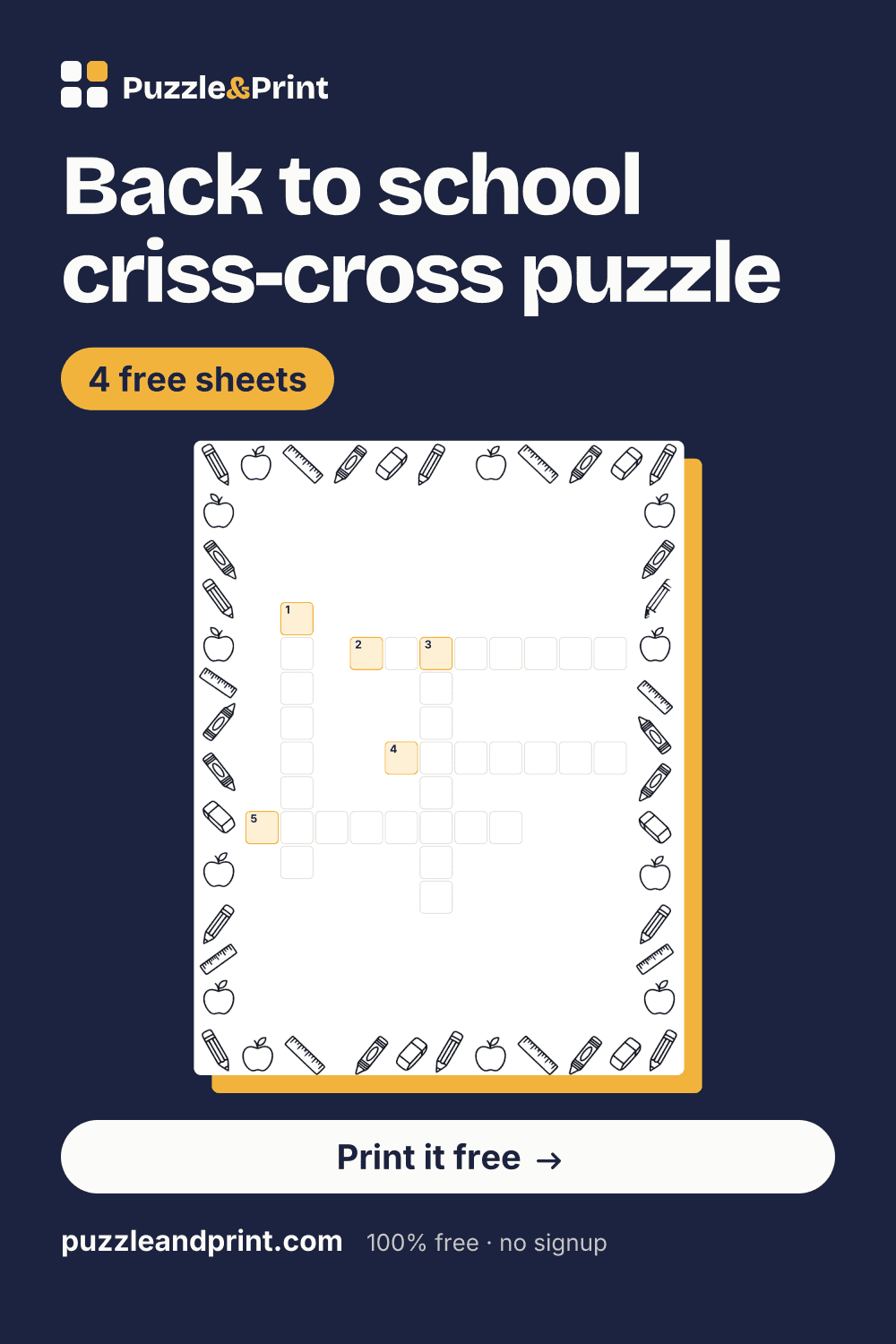
Back to school Criss-Cross
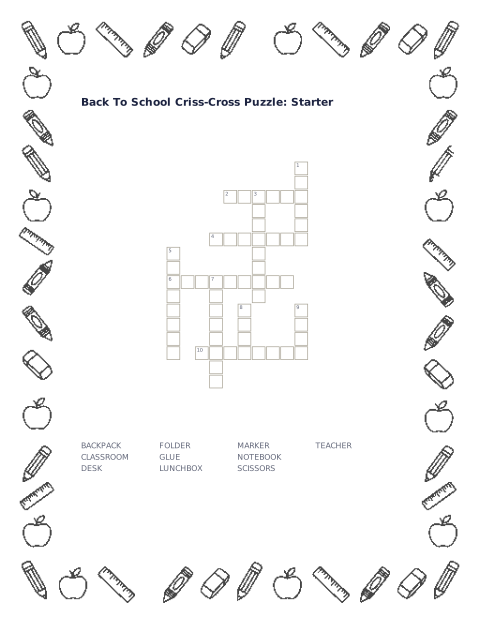
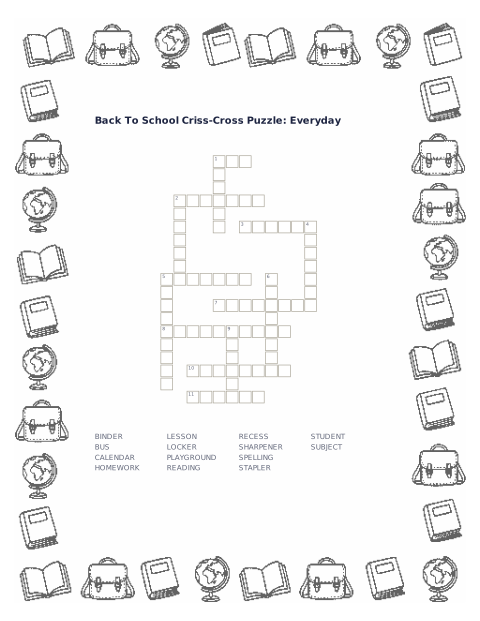
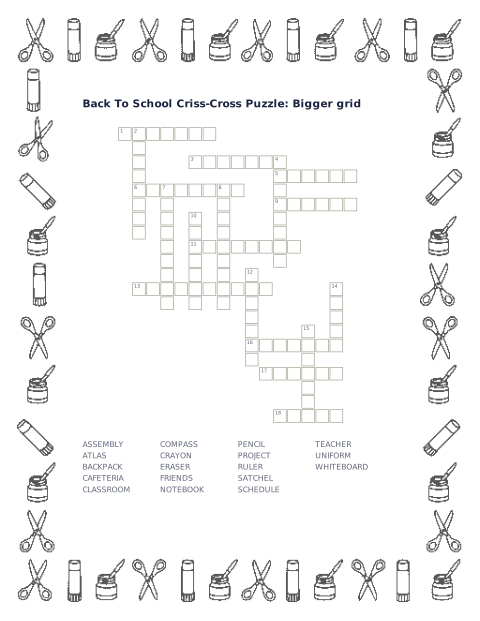
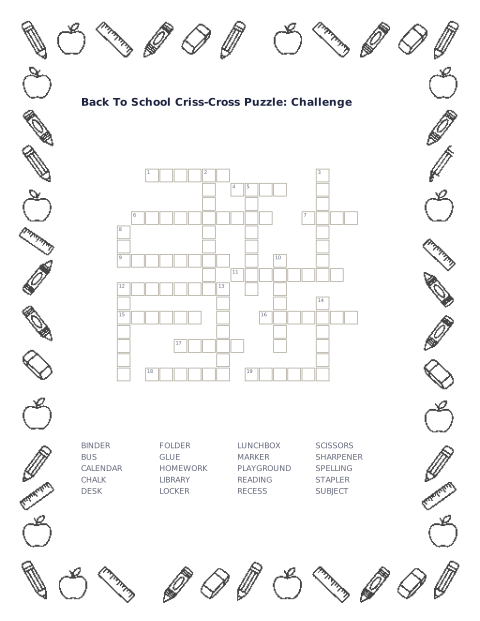
- ASSEMBLY
- CAFETERIA
- CLASSROOM
- ERASER
- LESSON
- LIBRARY
- LUNCHBOX
- PENCIL
- PROJECT
- RECESS
- SHARPENER
- SPELLING
Created for free at puzzleandprint.com
Interlock your own list, or take one of four ready-made first-week grids.
Save this to PinterestCreated for free at puzzleandprint.com
Created for free at puzzleandprint.com
Four grids from ten words to twenty. Every one is a two-page PDF, the puzzle, then the answer key on its own page.
The first week needs activities that occupy a class you do not know yet. A criss-cross is close to ideal for it: the instructions are one sentence, nobody needs to have read anything over the summer, and it can be done silently at a desk while you work through the register and the forms and everything else the first morning consists of.
It also tells you something. Watching who finishes the fourteen-word grid, who fixes their own spelling when a word will not fit, and who has stopped after three words is a more honest first read on a class than any of the printed information you have been handed about them, and it takes no marking to collect.
The vocabulary is the room and the routine, PENCIL, LIBRARY, TIMETABLE, and that is deliberate. These are words the class will read on signs and worksheets every day for a year, and most of them will never be formally taught. Spelling them into a grid once in September is a cheap way of making sure they are recognised in October.
If your school has its own words, the maker on this page takes a pasted list and interlocks it in a few seconds. The names of the eight classrooms, the subjects on the timetable, or the thirty children in the class, which is the version that gets used most and is the one no ready-made sheet can give you.
The instructions are one sentence, nothing has to have been read over the summer, and it can be done silently at a desk while you work through the register. It occupies a class you do not know yet, which is the actual problem the first morning presents.
Watching who fixes their own spelling when a word will not fit, and who has stopped after three words, is a more honest first read on a class than the printed information you were handed about them. It takes no marking to collect.
It shared no usable letter with anything already placed, so there was nowhere to interlock it. Unlike a word search, a criss-cross cannot put a word somewhere on its own. Press New puzzle to rearrange everything, or swap the word for one with more vowels in it.
No, and that is the point of this rather than a crossword. The solver gets the full word list and works out where each one goes, so a puzzle takes about as long to make as a word search does.
They mark where a word begins, numbered left to right and top to bottom the way a crossword is. Where an across word and a down word start in the same square, they share one number.
Ten to fourteen makes a comfortable grid for most lists. Fewer than that and the puzzle is over quickly; past about sixteen the grid starts to sprawl and the squares get small on a printed page.
Always, and it prints on its own page so you can hand out the puzzle without it. The key is the same grid with every letter filled in.
No. There is no sign-up, no email, and no watermark on the printed sheet. The grid is worked out in your browser, so your word list never reaches us.
New printables when they go up, mostly seasonal, a few times a year.