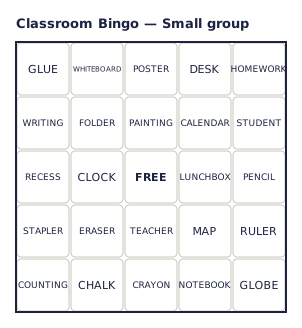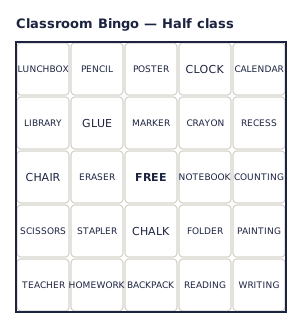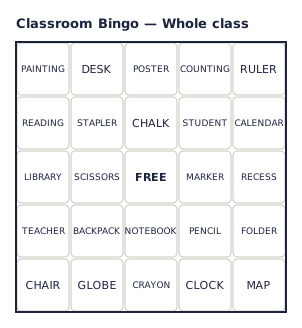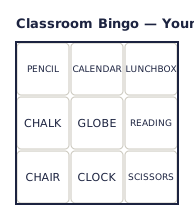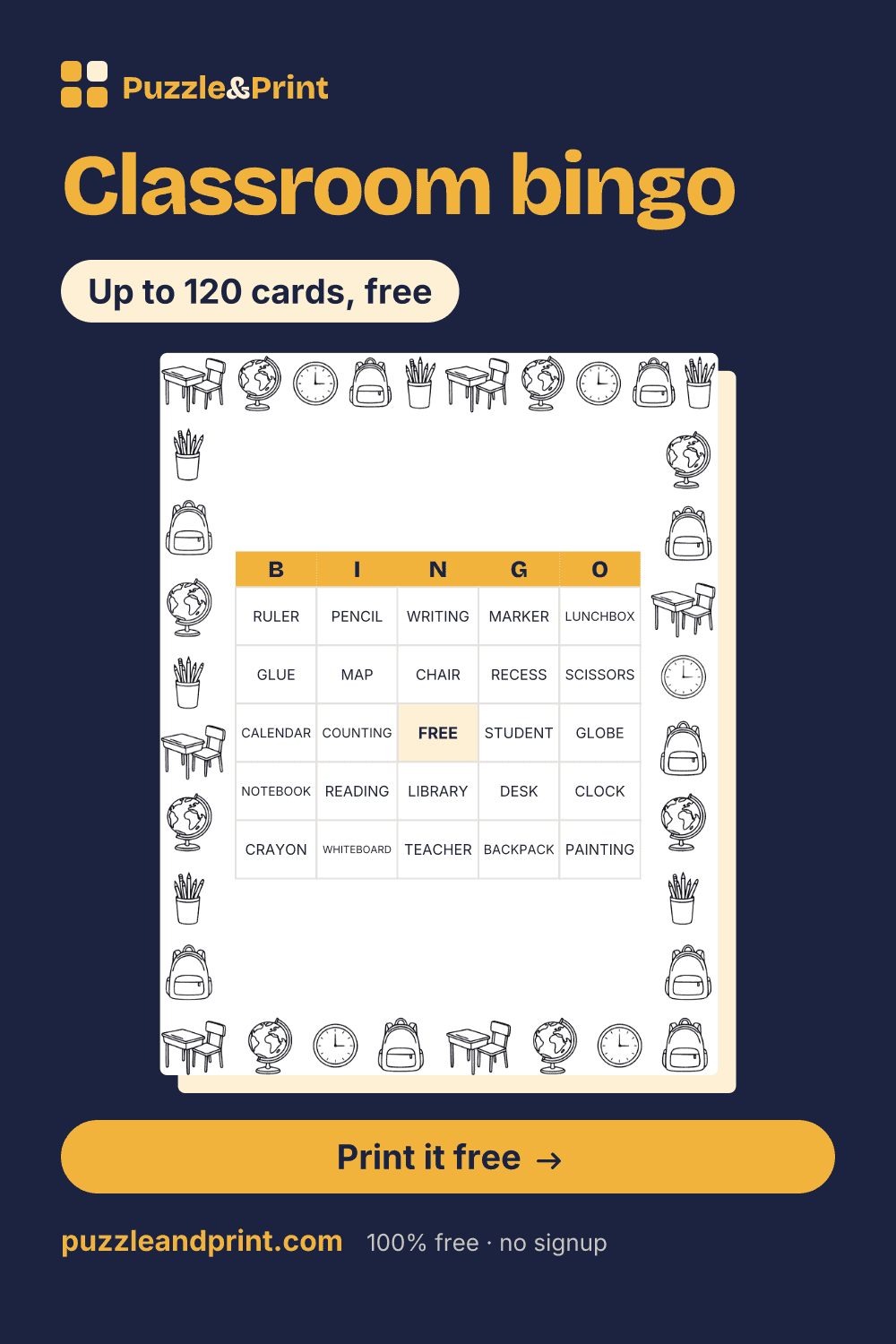
Classroom Bingo, card 1
RECESSPAINTINGSPELLINGNUMBERSREADINGMAPCHAIRPROJECTNOTEBOOKBULLETINFOLDERLOCKERFREEPOSTEREASELGLUECALENDARBACKPACKERASERSTAPLERWRITINGLUNCHBOXCRAYONSATCHELCHALK
Created for free at puzzleandprint.com
Created for free at puzzleandprint.com
Tick each word as you call it. 40 words in play.
Created for free at puzzleandprint.com
Four sets sized for different groups. Every card within a set is different, and they print two to a page.
Bingo earns its place in a classroom because it is one of the few games where every child is engaged on every turn. There is no waiting for your go, a call is a call for everyone at once, which is why it holds a room of thirty better than most activities that need no equipment.
The ready-made sets here use everyday classroom vocabulary and come in sizes for a small group, half a class, and a full thirty. There is also a 3 × 3 set for younger children or for a round that has to fit into the ten minutes before lunch.
The real use, though, is as a shell for whatever you are teaching. Any list of terms works: the parts of a plant, key dates, French numbers, the vocabulary before a unit test. Calling the definition instead of the word turns it from a reading game into a comprehension one without changing the cards at all.
Around thirty to forty words gives genuinely varied cards for a class that size. With exactly 24 every card holds the same words in a different order, which still plays fine but ends more predictably.
With thirty cards in play it happens more often than you would expect, because every card is different but they are all drawn from one pool of words. Calling a second round to a different pattern, four corners or a full line or the whole card, settles it without reprinting anything.
Call the definition instead of the word and the same cards become a comprehension exercise. Parts of a plant, key dates, French numbers, the terms before a unit test: the cards do not change, only what you say out loud.
At least 24 for a 5 × 5 card, or nine for a 3 × 3. The 5 × 5 needs 24 rather than 25 because the middle square is free. Around 30 to 40 words gives genuinely varied cards.
Yes. Each card is checked against every card already in the set before it is added, so duplicates cannot slip through. If your word list is too small to make the number you asked for, the tool tells you how many are actually possible rather than quietly repeating.
On the 5 × 5 cards, in the middle, as usual. The 3 × 3 cards do not have one, with only nine squares a free one makes the game too short.
Up to 40 in a single PDF, which covers most classes and parties. They print two to a page at the standard size.
Yes, choose Write my own and type or paste your list. Guest names, spelling words, vocabulary terms, anything. Your list stays in your browser and is never sent to us.
No sign-up, no email, no watermark on the printed cards.
New printables when they go up, mostly seasonal, a few times a year.