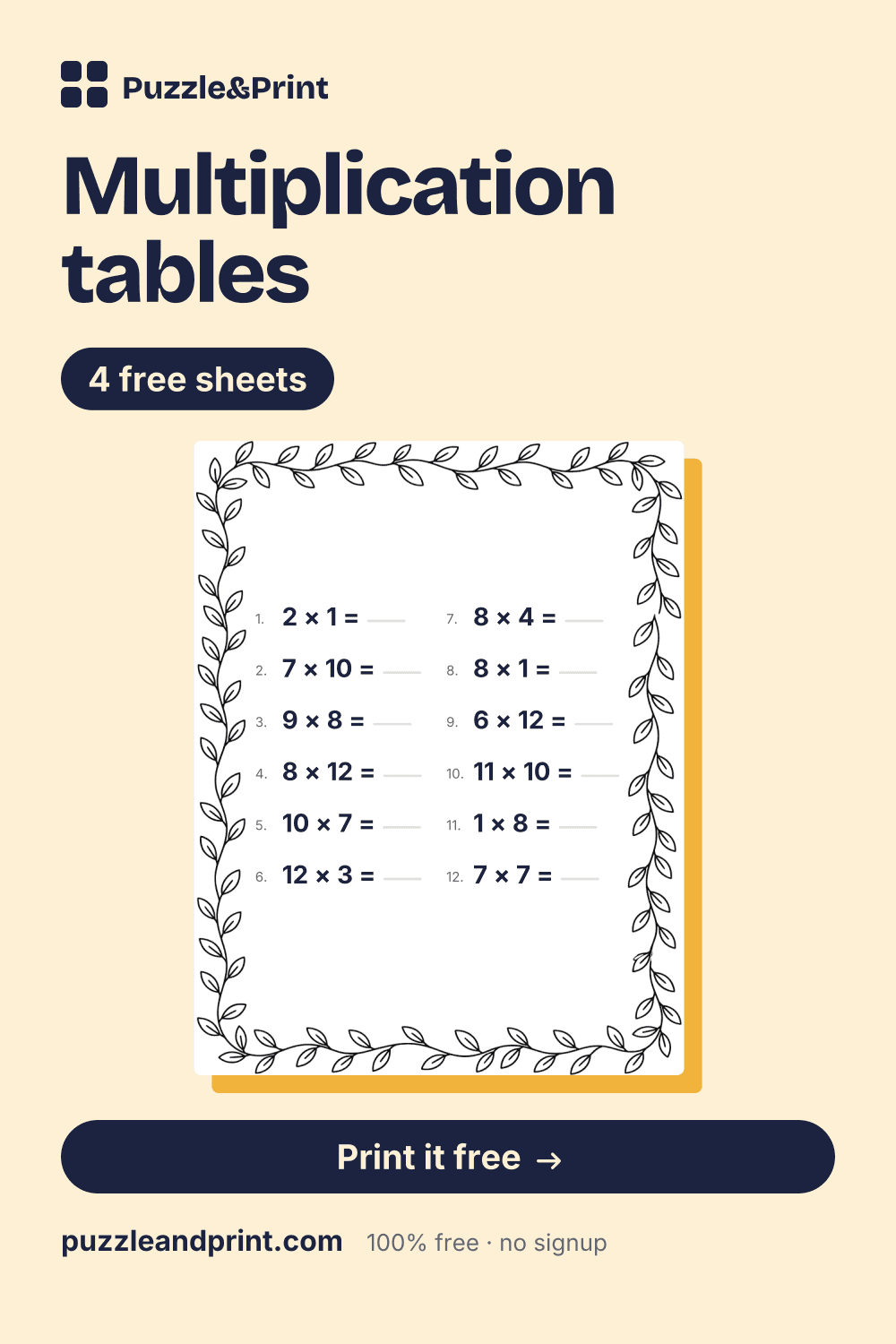
Multiplication Tables
- 9 × 2 =
- 11 × 7 =
- 8 × 3 =
- 4 × 1 =
- 12 × 2 =
- 1 × 6 =
- 12 × 6 =
- 8 × 9 =
- 5 × 8 =
- 11 × 3 =
- 9 × 1 =
- 2 × 5 =
- 1 × 5 =
- 10 × 9 =
- 4 × 9 =
- 11 × 4 =
- 5 × 6 =
- 4 × 12 =
- 6 × 9 =
- 11 × 5 =
Created for free at puzzleandprint.com
Created for free at puzzleandprint.com
Created for free at puzzleandprint.com
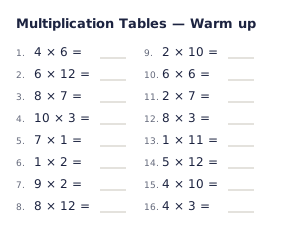
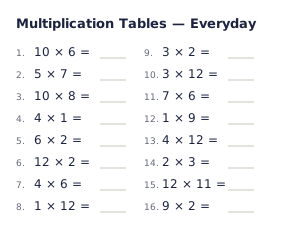
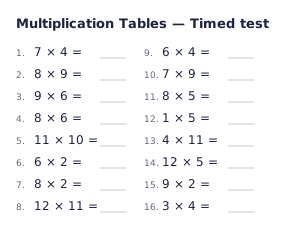
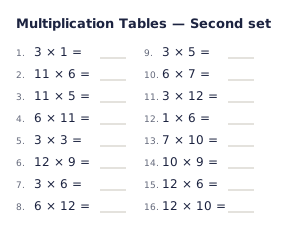
Four sheets at different lengths. Every one is a two-page PDF, the worksheet, then the answer key on its own page.
The times tables are the clearest case in primary maths where automatic recall matters more than method. A child who has to work out 7 × 8 has spent their attention on it and has none left for the long multiplication problem it was part of.
These sheets cover 1 to 12 with the problems in random order, which matters: reciting a table in sequence is a different and much easier skill than answering 6 × 9 cold. Random order is what tests recall rather than rhythm.
If a particular table is not sticking, the generator will drill it on its own: set one of the two numbers to the same value at both ends, say 7 to 7, and you get 7 × 1 through 7 × 12 shuffled. That is usually more effective than another mixed sheet.
The hundred-problem page is a timed-test format and suits children who are already fluent and working on speed. For anyone still building recall, fifty is a better sheet.
Because reciting a table in sequence is a much easier and quite different skill from answering 6 × 9 cold. Random order tests recall; sequence tests rhythm, and only one of the two survives being needed in the middle of a longer problem.
Drill it on its own. Set both ends of one range to the same value, say 7 to 7, and you get 7 × 1 through 7 × 12 shuffled. That is usually more effective than another mixed sheet where the difficult table appears eight times.
No. The two numbers are ordered before the problem is written, so the larger one always comes first and the answer is never below zero. The range you set is still respected.
Always. The divisor and the answer are chosen first and the dividend is calculated from them, so there is never a remainder and never a division by zero. That is built into how the problems are made rather than something filtered out afterwards.
Choose multiplication and set one of the two numbers to the same value at both ends, 7 to 7, for example. The other number stays a range, so you get 7 × 1 through 7 × 12 in a random order.
On page two of the PDF, laid out in the same order as the worksheet so you can mark down the columns.
Only if your ranges cannot make enough different problems to fill the page, 1 to 3 by 1 to 3 gives nine possibilities, so a 20-problem page must repeat. The tool warns you when that happens and suggests widening a range.
No. No sign-up and no watermark, and the worksheet is generated in your browser rather than on a server.
New printables when they go up, mostly seasonal, a few times a year.