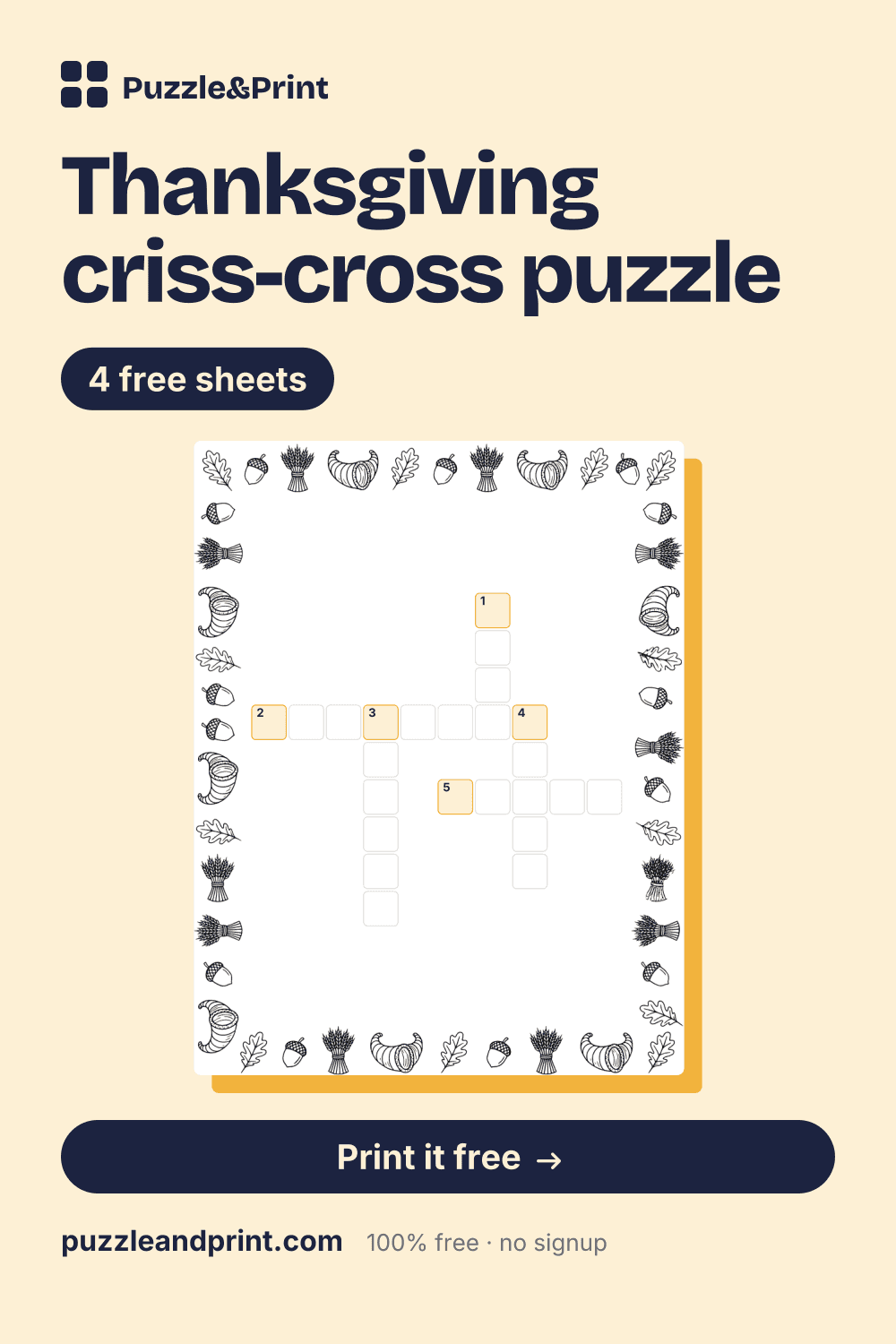
Thanksgiving Criss-Cross
- ABUNDANCE
- ACORN
- APRON
- BOUNTY
- CINNAMON
- GATHER
- HARVEST
- ORCHARD
- PUMPKIN
- ROASTED
- TURKEY
- YAMS
Created for free at puzzleandprint.com
Interlock your own list, or take one of four ready-made autumn grids.
Save this to PinterestCreated for free at puzzleandprint.com
Created for free at puzzleandprint.com
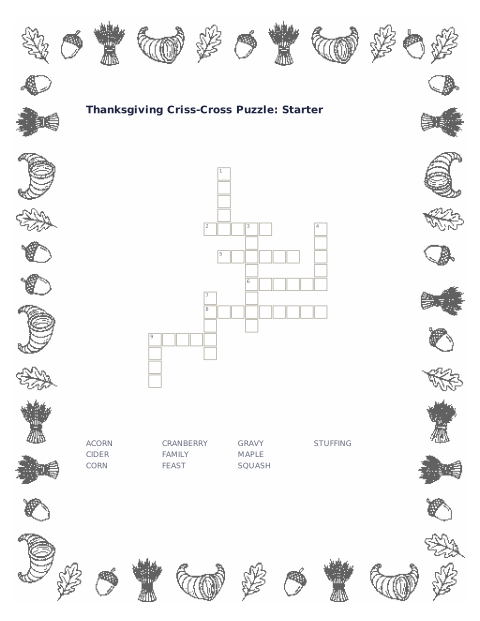
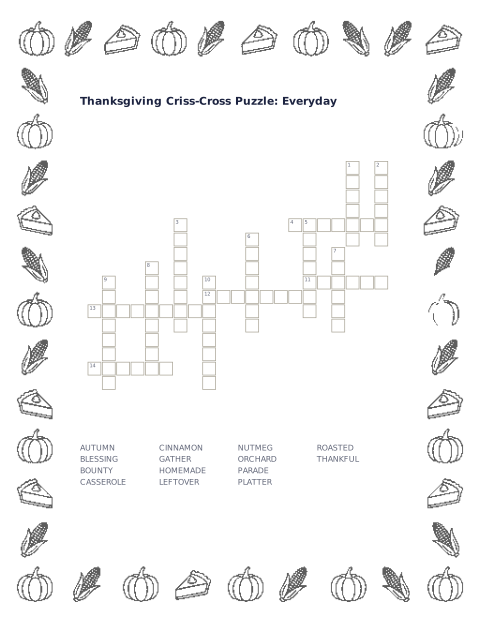
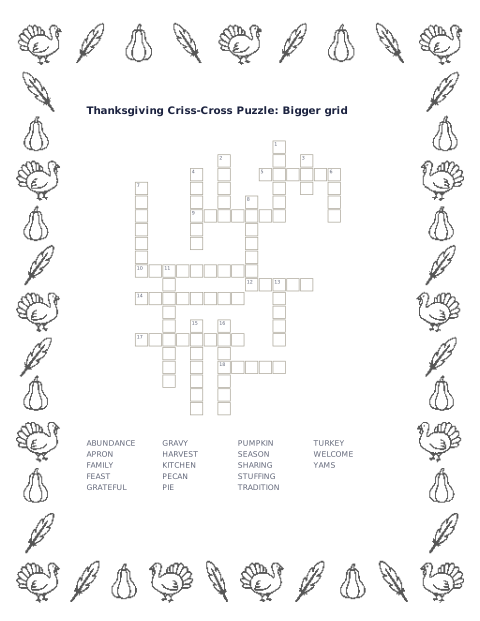
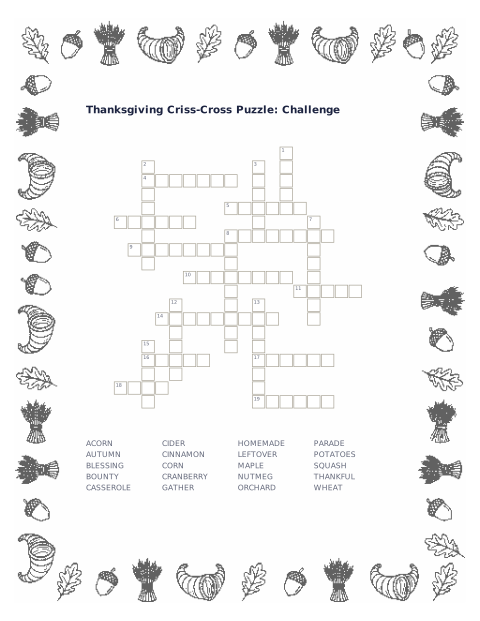
Four grids from ten words to twenty. Every one is a two-page PDF, the puzzle, then the answer key on its own page.
This is the puzzle to put on the table before the meal rather than after it. A criss-cross can be done by two people at once from opposite sides of a sheet, it needs one pencil, and it does not require anyone to know anything, which makes it one of the few table activities that works across four generations without embarrassing anybody.
The word bank is what makes that possible. A crossword with clues sorts a family by general knowledge and reading age within about ninety seconds. A criss-cross gives everyone the same twenty words and asks only where they go, so a child and a grandparent are solving the same problem with the same information.
The vocabulary here is the harvest and the table rather than any particular history: PUMPKIN, GRATEFUL, HARVEST, FEAST. That keeps it usable in a classroom in the week before the holiday, where the subject matter has to stay on the food and the season, and it keeps it usable at a table where not everyone marks the day the same way.
Print the ten-word starter for younger children and the twenty-word challenge for whoever claims to be good at these. Both are two-page PDFs with the answer key on its own sheet, so you can hand out the puzzle without handing out the answers.
Better than a crossword does. Clues sort a family by general knowledge within a minute or two. A criss-cross hands everyone the same words and asks only where they go, so a child and a grandparent are working on the same problem with the same information.
No. It is the harvest and the table, PUMPKIN, HARVEST, GRATEFUL, FEAST. That keeps it usable in a classroom the week before, where the subject has to stay on the food and the season, and at a table where not everyone marks the day the same way.
It shared no usable letter with anything already placed, so there was nowhere to interlock it. Unlike a word search, a criss-cross cannot put a word somewhere on its own. Press New puzzle to rearrange everything, or swap the word for one with more vowels in it.
No, and that is the point of this rather than a crossword. The solver gets the full word list and works out where each one goes, so a puzzle takes about as long to make as a word search does.
They mark where a word begins, numbered left to right and top to bottom the way a crossword is. Where an across word and a down word start in the same square, they share one number.
Ten to fourteen makes a comfortable grid for most lists. Fewer than that and the puzzle is over quickly; past about sixteen the grid starts to sprawl and the squares get small on a printed page.
Always, and it prints on its own page so you can hand out the puzzle without it. The key is the same grid with every letter filled in.
No. There is no sign-up, no email, and no watermark on the printed sheet. The grid is worked out in your browser, so your word list never reaches us.
New printables when they go up, mostly seasonal, a few times a year.