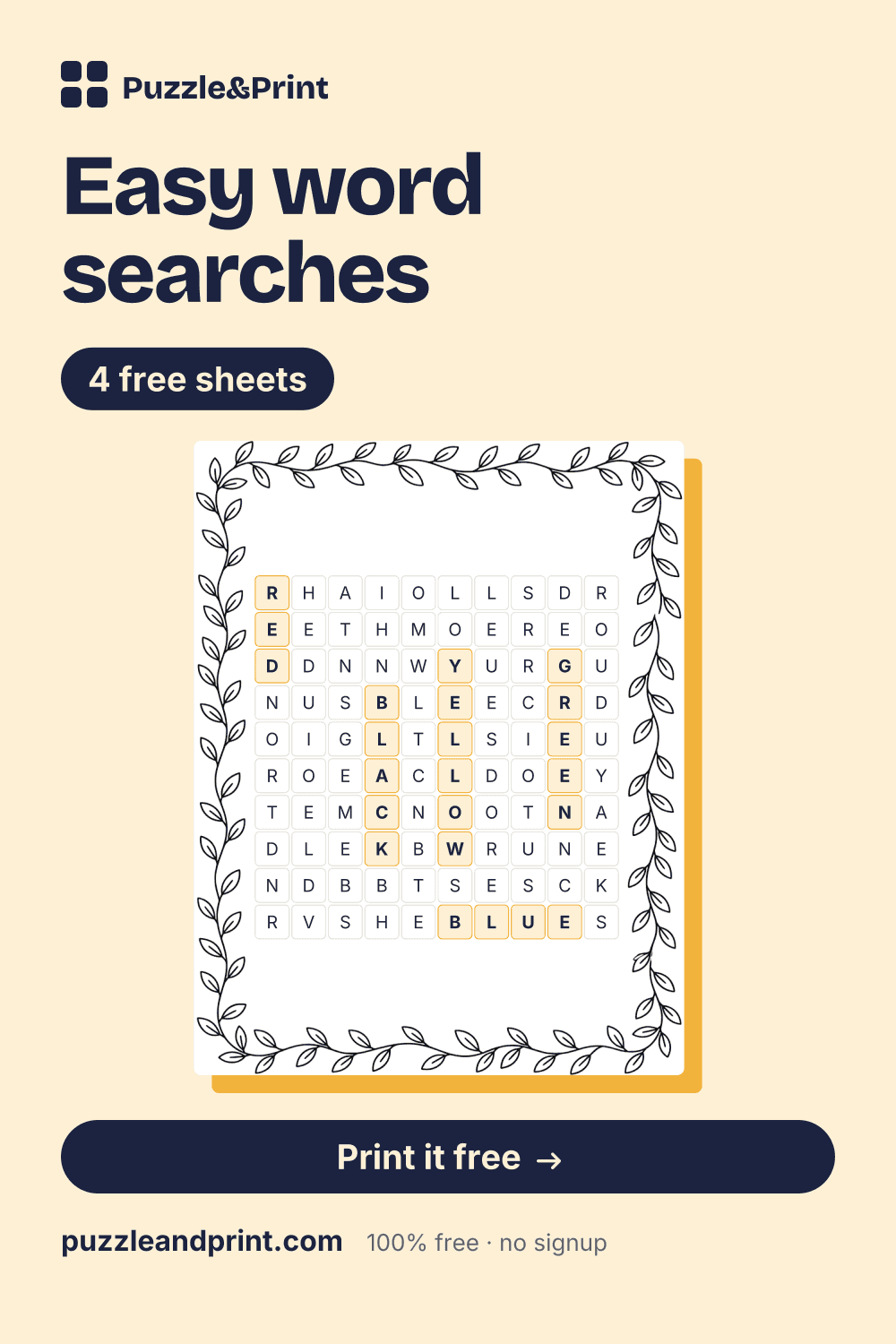
Colours and numbers Word Search
- THIRTY
- AMBER
- BLUE
- HUNDRED
- SEVEN
- FIFTEEN
- SIX
- NINE
- FOURTEEN
Created for free at puzzleandprint.com
Words run across and down only, nothing backwards, nothing diagonal.
Save this to PinterestCreated for free at puzzleandprint.com
Created for free at puzzleandprint.com
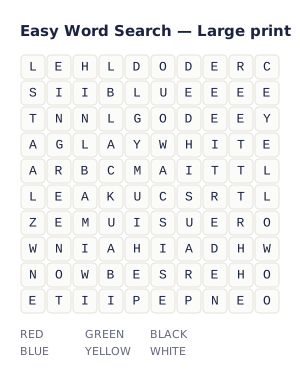
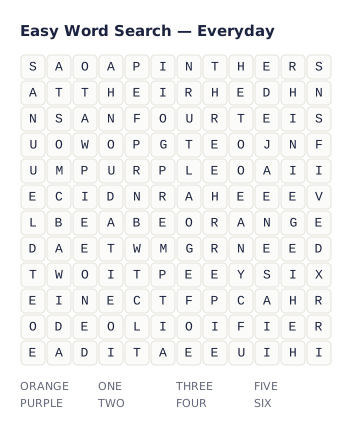
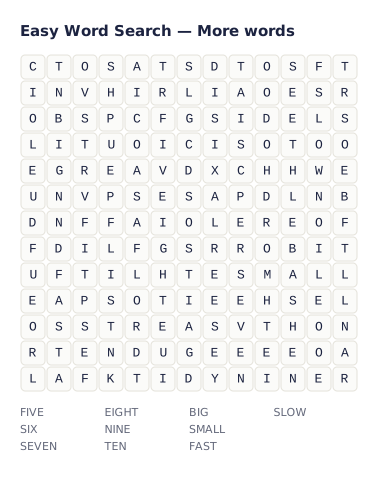
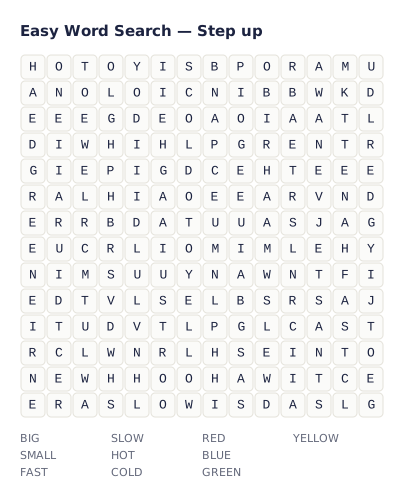
Four sheets, each with a different job. Every one is a two-page PDF, the puzzle, then the answer key on its own page.
What makes a word search easy is not the words, it is the directions. Once words can run diagonally or backwards, the number of lines a solver has to check goes from two to eight, and the puzzle stops being a reading exercise and starts being a scanning one. Every sheet on this page keeps words running left to right and top to bottom, which is how we read anyway.
That makes these useful well beyond young children. They work for anyone returning to puzzles after a break, for English language learners who are still building confidence with unfamiliar words, and in care settings where a puzzle should be gentle rather than a test. The satisfaction of finishing is the point.
Grids here run from ten to fourteen squares with six to ten words apiece, printed large. If you want to nudge the difficulty up without making the grid harder to read, add words rather than directions, twelve words in a fourteen by fourteen grid takes longer than eight but never feels unfair.
The maker on this page does the same thing with your own list. Choose Easy under difficulty and it will keep every word running the friendly way.
The directions, not the words. Every sheet here runs left to right and top to bottom only, so there are two lines to check rather than eight. That single change is the difference between a reading exercise and a scanning one.
No, and it is worth saying so. They suit adults coming back to puzzles after a break, people learning English who are still meeting unfamiliar words, and care settings where a puzzle should be gentle rather than a test. The satisfaction of finishing is the whole point.
Up to twenty-five. Ten to fifteen is comfortable for most grids. If you add more than the grid can hold, the tool tells you which words did not fit rather than silently leaving them out.
Either it is longer than the grid is wide, or the grid filled up before it could be placed. Try the next size up, remove a word, or press New puzzle for a different arrangement, a word that fails one layout often places fine in the next.
Yes. Set difficulty to Easy so words only run left to right and top to bottom, and use a 10 by 10 grid with five to eight short words. That combination is manageable for most children who can read the words on the list.
Always, and it prints on its own page so you can hand out the puzzle without it. Each answer is marked directly on a copy of the grid.
No. There is no sign-up, no email, and no watermark on the printed sheet. Puzzles are built in your browser, so your word list never reaches us.
Yes, use them with your class, your family, your club, or your care home, and print as many copies as you need. The one thing we ask is that you do not resell the sheets themselves.
New printables when they go up, mostly seasonal, a few times a year.