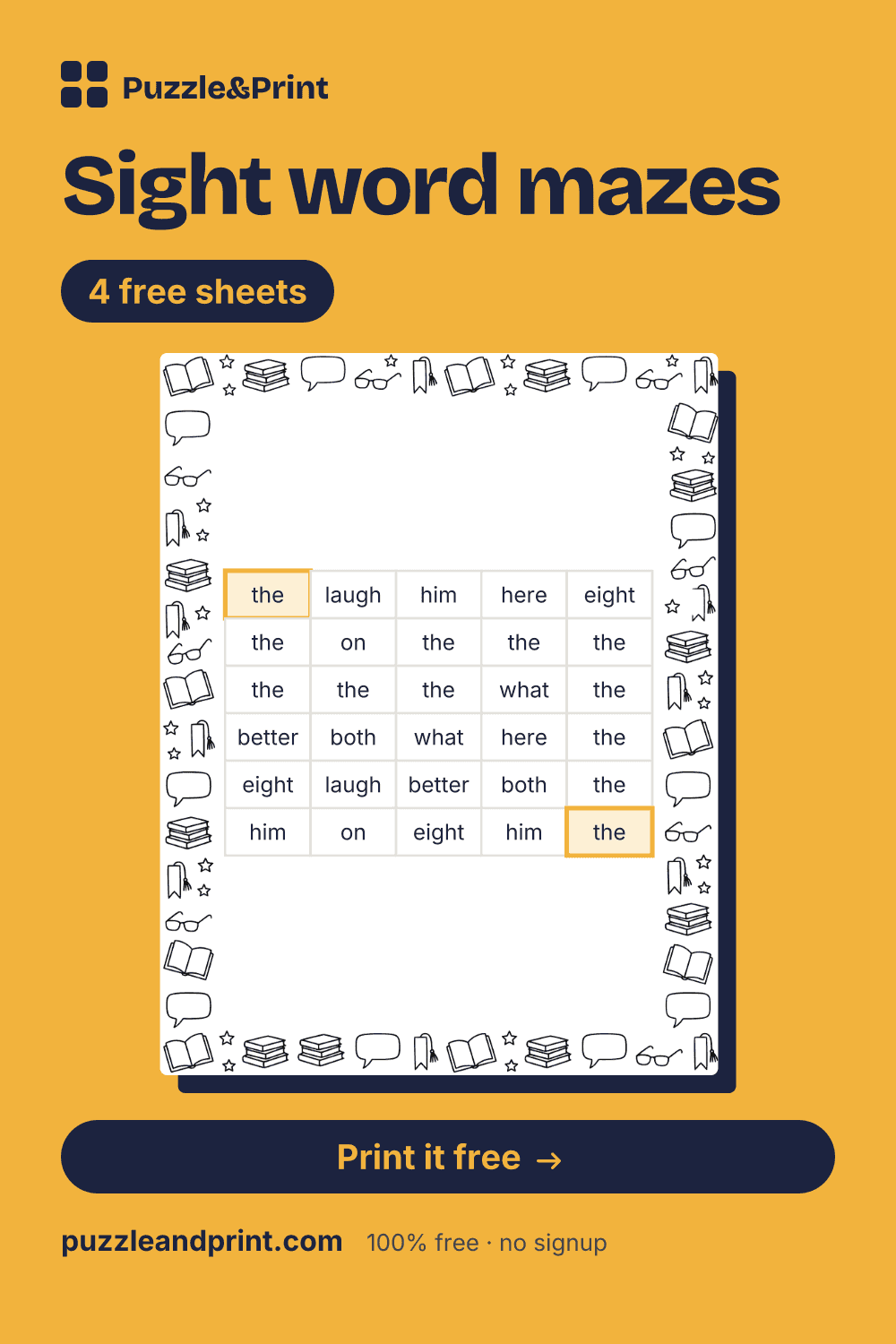
Sight Word Maze
Sight word path · 5 × 6 · Easy
Color every square that says the. The colored squares make one path from START to FINISH.
Created for free at puzzleandprint.com
Color every square that holds the word, and the colored squares make the way through.
Last updated
Save this to PinterestSight Word Maze
Sight word path · 5 × 6 · Easy
Color every square that says the. The colored squares make one path from START to FINISH.
Created for free at puzzleandprint.com
Sight Word Maze, Answer Key
Sight word path · 5 × 6 · Easy
Color every square that says the. The colored squares make one path from START to FINISH.
Created for free at puzzleandprint.com
Four mazes, each a two-page PDF: the maze, then the answer key with the path drawn in, on its own page.
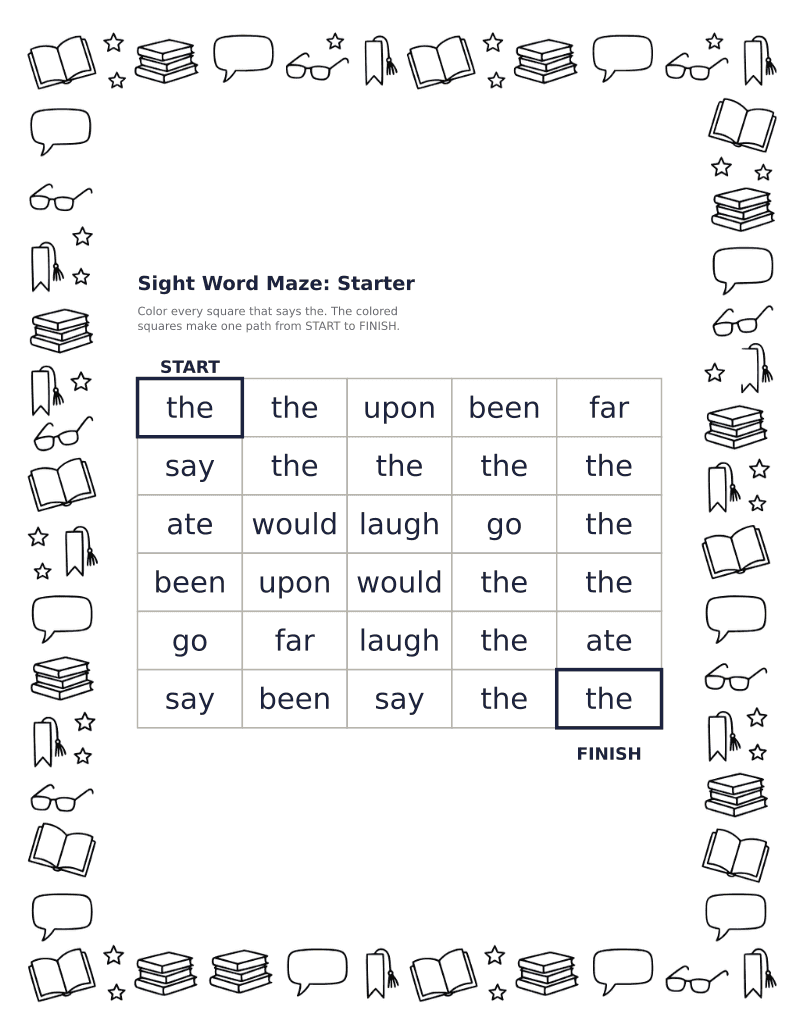 Sight word maze, starterthe · 5 × 6 · EasyDownload PDF ↓
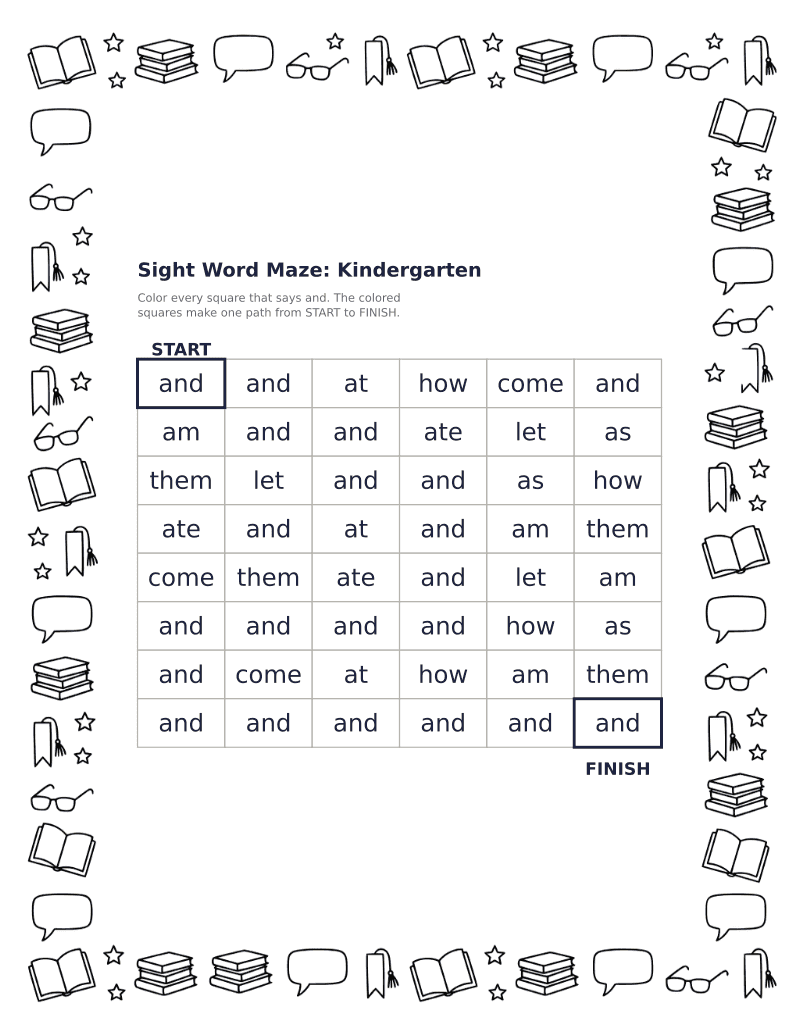 Sight word maze, kindergartenand · 6 × 8 · MediumDownload PDF ↓
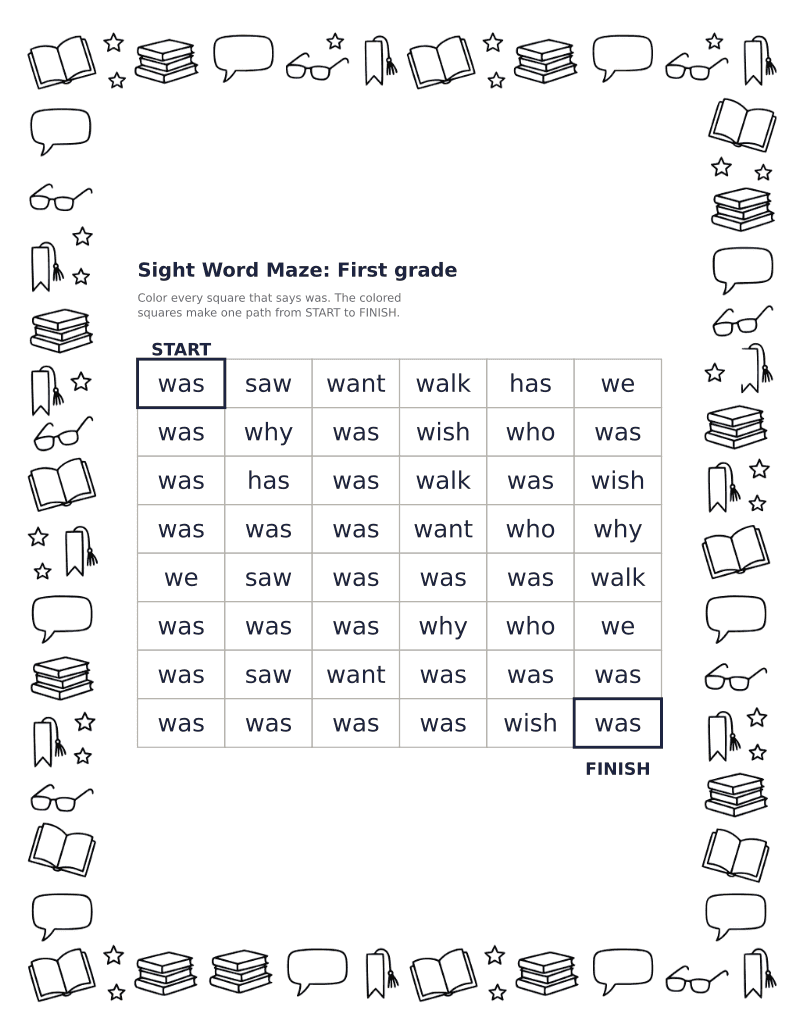 Sight word maze, first gradewas · 6 × 8 · HardDownload PDF ↓
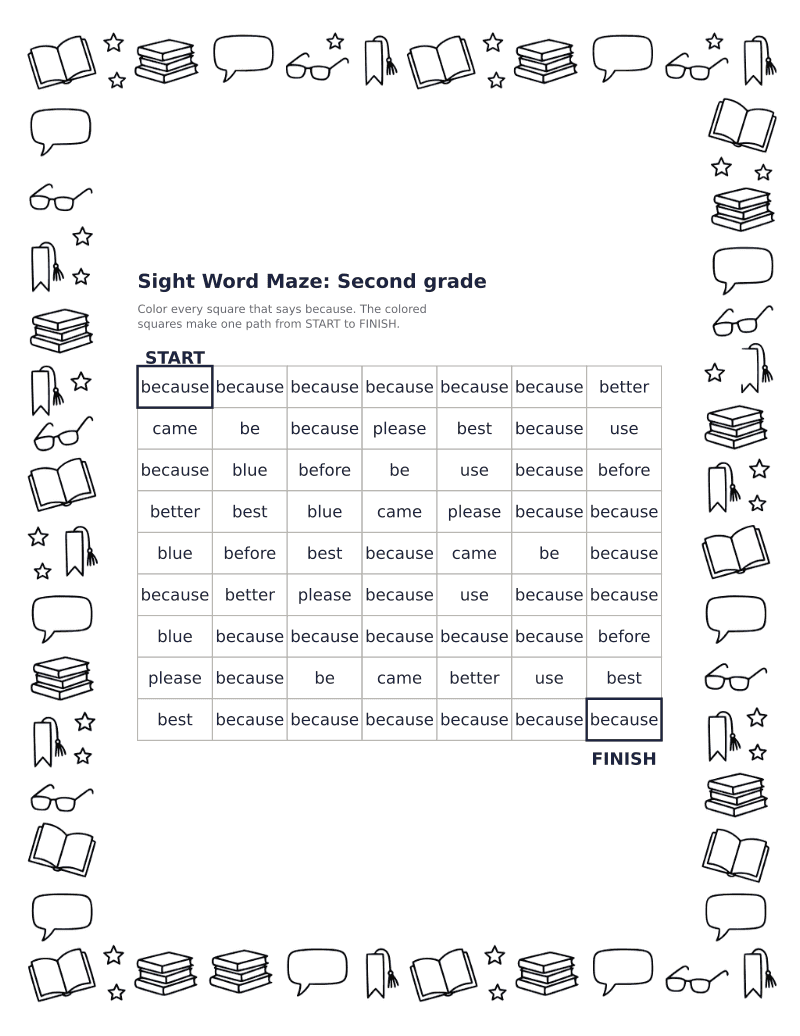 Sight word maze, second gradebecause · 7 × 9 · HardDownload PDF ↓
Every sheet here is free to print as often as you like. If one saved you time, the tip jar is on Ko-fi.
A sight word maze turns one word into a path. Each square of the grid holds a short word, and the squares holding the target word join into a single track from START in the top left corner to FINISH in the bottom right. A child reads every square, colors the ones that match, and the route appears. Nothing on the sheet needs to be written, so it works for a child who is reading well before they are writing comfortably.
The four sheets step up in grid size and in how alike the other words look. Starter puts the on a 5 by 6 grid among words that look nothing like it. Kindergarten hides and on a 6 by 8 grid among four look-alikes, as, am, ate and at, plus two stray copies of and that lead nowhere. First grade does the same for was with only look-alikes around it, such as saw, want and wish, and adds two short dead ends. Second grade does it for because on 7 by 9.
Every other word on these sheets comes from the Dolch sight word lists, so the practice never asks a child to decode a word they have not met at school. Each grid was checked so that exactly one track of the target word links START to FINISH, and the answer key on the second page shows that track as a gray band.
The maker above opens on the starter settings. Type any sight word, pick a grid and a level, and it builds a new path; type your own list of other words if you want the decoys to come from this week’s spelling list rather than from the Dolch words.
On the Starter sheet the 12 squares holding the are exactly the route, so coloring every one of them colors the path and nothing else. Kindergarten has 21 squares of and: 19 on the route and two strays that touch no other copy. First grade has 25 squares of was, 19 on the route, two strays and four more in two short spurs that branch off the route and stop. Second grade has 30 squares of because, with a 25 square route, two strays and three spur squares.
That is the progression worth knowing before handing one out. A starter child can color every match without thinking about where the path goes; by first grade, coloring every match leaves a few colored squares that are plainly not on the way through, and spotting which ones is part of the puzzle.
The starter grid surrounds the with eight words that share nothing obvious with it, among them been, say, upon and laugh. Kindergarten mixes four look-alikes for and (as, am, ate and at) with plainly different words such as come and how. First grade uses only words that look like was: saw, want, wish, walk, who, why, has and we, so a child reading by the first letter alone will color the wrong square.
Few Dolch words look like because, so the second grade sheet uses the two that do, better and before, and fills out with the nearest remaining words, such as best, be and please. On the answer key only the route is shaded, so any stray or spur squares a child colored stand out and can be talked through.
The Starter sheet. Its 5 by 6 grid holds the twelve times, all of them on the route, and the other words look nothing like the, so coloring every match colors the path. Move on to the Kindergarten sheet once a child colors the starter without help.
No, they are part of the exercise. Coloring every copy of the word is the right first step; the path is the colored track that links START to FINISH, and a stray or a spur is a colored square that does not join it. Only the route is shaded on the answer key.
New printables when they go up, mostly seasonal, a few times a year.