Graph Paper
Created for free at puzzleandprint.com
Created for free at puzzleandprint.com
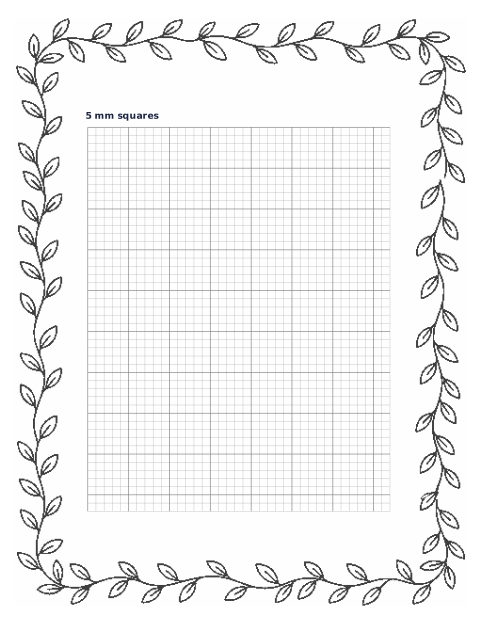
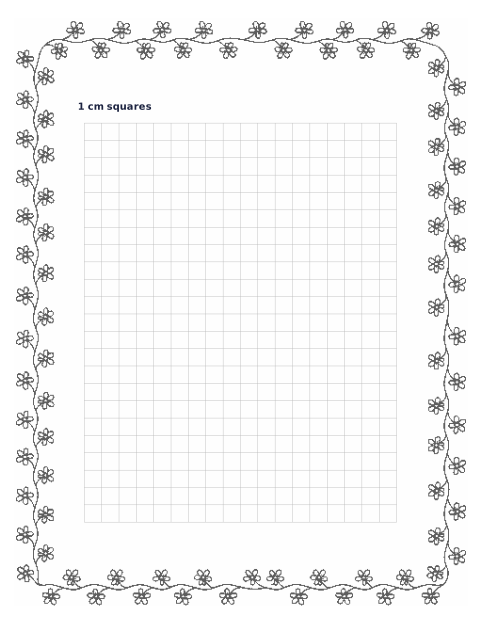
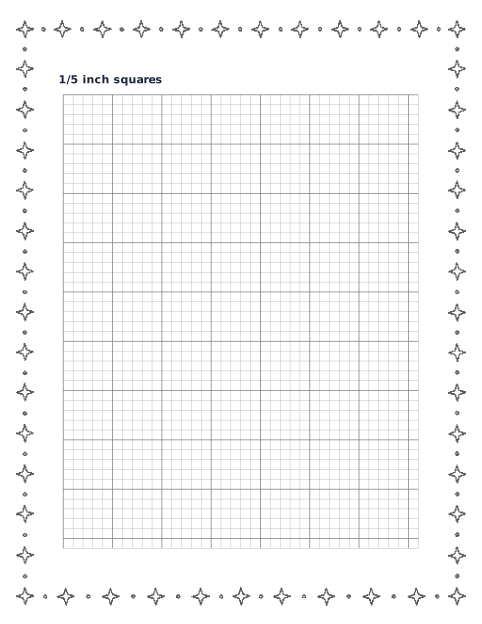
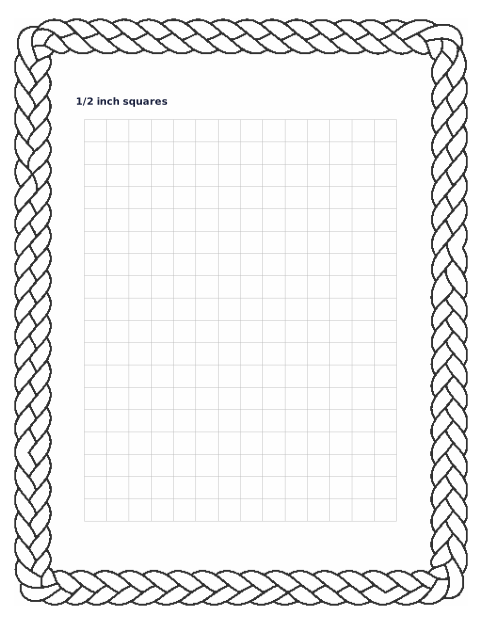
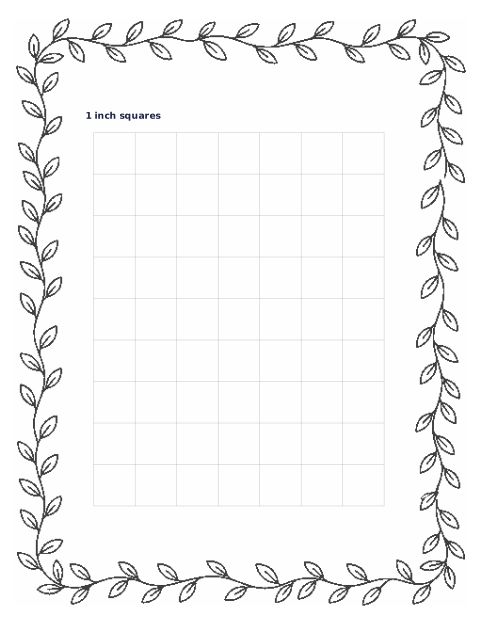
Ruled sheets at the standard sizes, each one a single page. The measurement is printed at the foot, so a reprint can be checked against a ruler.
Squared paper is the one stationery item that always runs out mid-homework, and the one most likely to be wrong when you buy it, the pad in the drawer is 1 cm and the exercise book is 5 mm, and a graph drawn on the wrong one has to be redrawn.
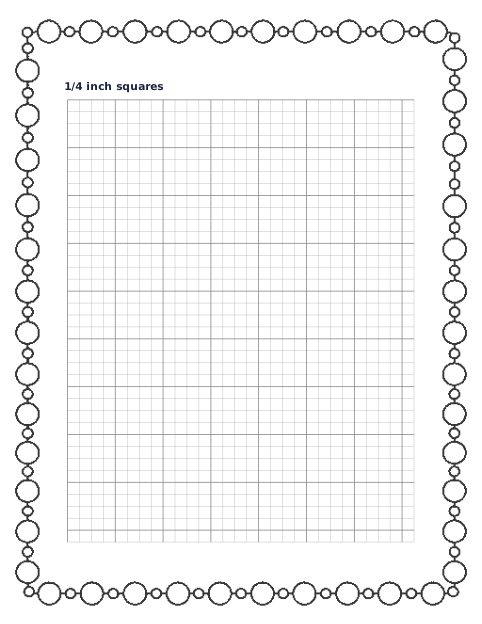
The six sheets here cover what school and work actually ask for, from 5 mm up to a full inch, the big one being the sheet for younger children, who need room to write a digit inside a square. Metric sizes are exactly 5 mm and 1 cm. Imperial ones are exact too: quarter-inch paper is 6.35 mm, not 6 mm, and across a page that difference is visible against a ruler.
Every fifth or fourth line is printed slightly heavier, so squares can be counted at a glance rather than measured. The rules themselves are printed light grey rather than black, graph paper is a background for someone else's work, and a grid at full black competes with the pencil on top of it and drinks ink besides.
Print one or fifty. There is no sign-up, no watermark, and nothing on the sheet but the grid. If you need a different spacing the maker on this page will set any of them.
Only at 100%. "Fit to page" silently shrinks everything, and squared paper that is nearly right is worse than none. Check one sheet against a ruler before printing fifty. Quarter-inch paper here is 6.35 mm, not 6 mm, and across a page that difference is visible.
Match the book rather than guessing. Primary exercise books are usually 5 mm while the pad in the drawer is often 1 cm, and that mismatch is what gets a graph redrawn. The one-inch sheet is for younger children who need room to write a digit inside a square.
Yes. Print as many sheets as you like, for yourself, a class or a workplace. There is no sign-up, no watermark and no limit.
Almost always because the printer scaled it. Choose 100% or "actual size" rather than "fit to page" in the print dialog. If it still does not match, measure ten squares of the book and divide by ten, the book may not be the size you think it is.
Exactly 6.35 mm. Paper sold as 6 mm is a different thing, and over the width of a page the two are about 5 mm apart, which is enough to notice.
The gap between lines. Wide ruled is 8.7 mm and is what primary schools generally use, college ruled is 7.1 mm, and narrow ruled is 6.35 mm. All three are here.
The sheets are US Letter. A4 is slightly narrower and taller, so printing at 100% will simply crop a little from the right and leave a gap at the foot, the spacing itself stays correct, which is the part that matters.
Drawing three-dimensional objects without constructing perspective. It suits technical sketching, product design and any maths topic involving volume or nets, because every edge of a cube follows a line already on the page.
New printables when they go up, mostly seasonal, a few times a year.