Bingo, card 1
DESKSCISSORSREADINGEASELSTICKERSNUMBERSMAPSHARPENERCRAYONNOTEBOOKBACKPACKHOMEWORKFREETEACHERFOLDERERASERCHALKCALENDARLIBRARYGLOBEWRITINGPAINTINGBULLETINCHAIRWHITEBOARD
Created for free at puzzleandprint.com
Empty templates to write on, each with the word bingo across the top and an edge to cut along.
Last updated
Save this to PinterestFour templates, each a three-page PDF: one card filling the sheet, two cards to a page with a line to cut along, and a call list to write the words in.
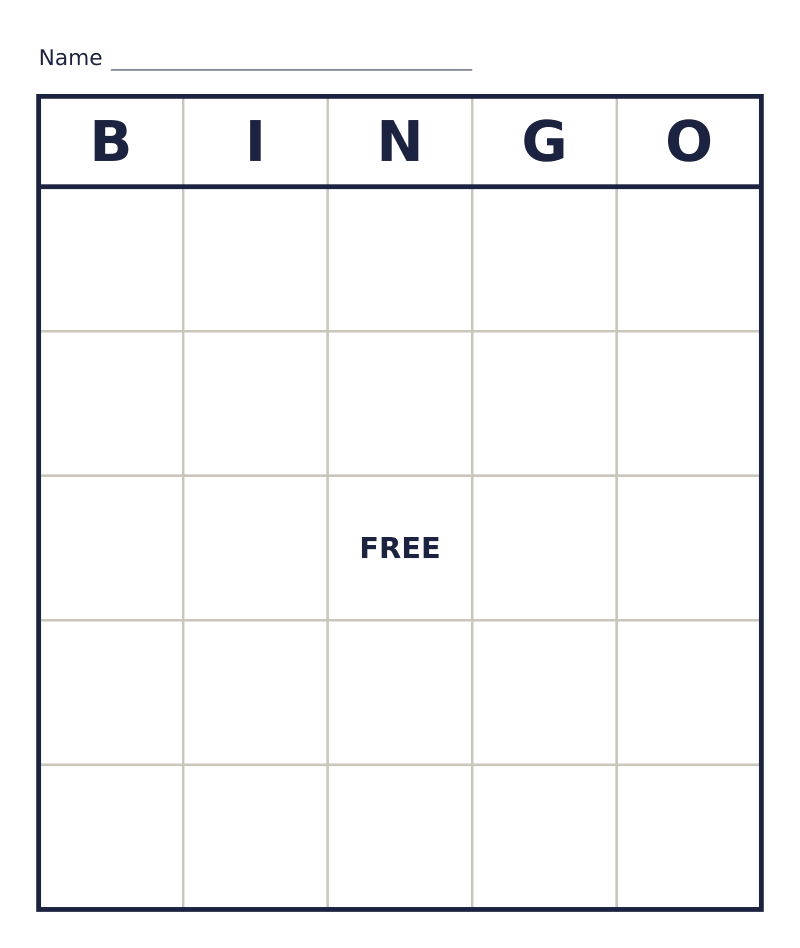 Blank bingo card 5x5 with free space3 pages · one card, two to a page, call list with 40 linesDownload PDF ↓
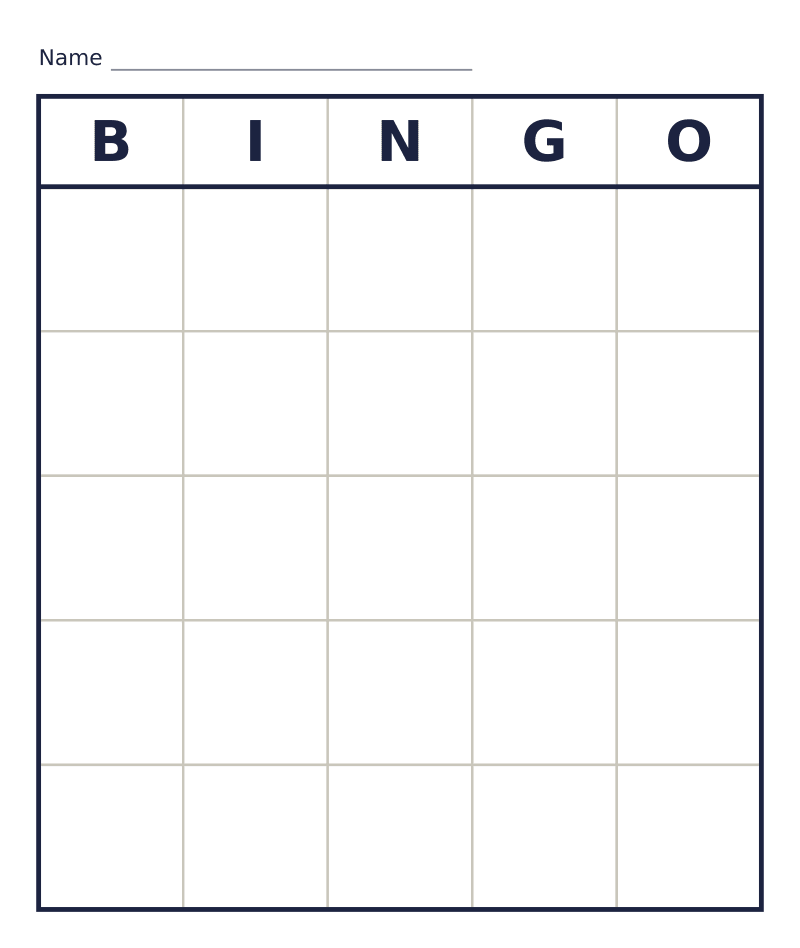 Blank bingo card 5x5 without free space3 pages · one card, two to a page, call list with 42 linesDownload PDF ↓
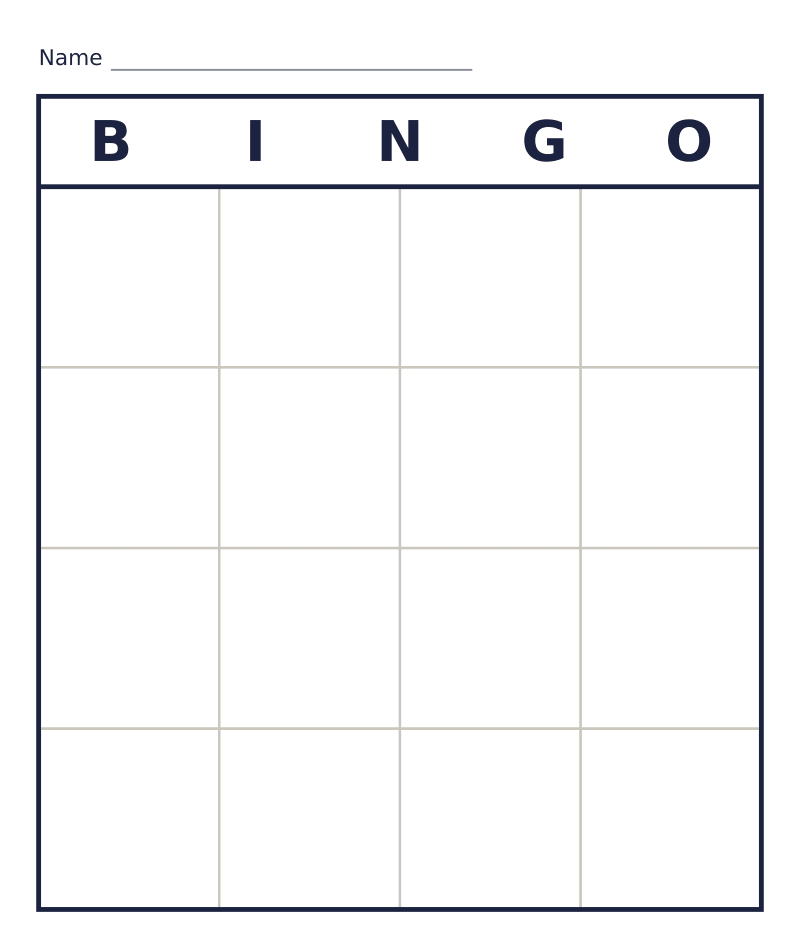 Blank bingo card 4x43 pages · one card, two to a page, call list with 28 linesDownload PDF ↓
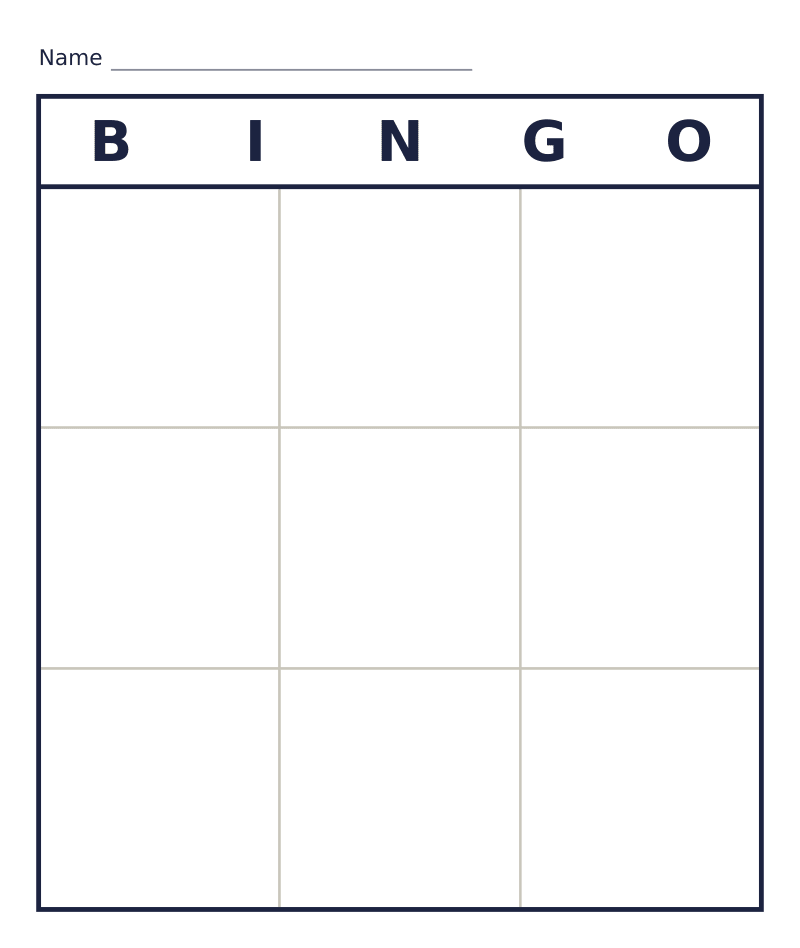 Blank bingo card 3x3 for young children3 pages · one card, two to a page, call list with 16 linesDownload PDF ↓
Every sheet here is free to print as often as you like. If one saved you time, the tip jar is on Ko-fi.
Bingo, card 1
Created for free at puzzleandprint.com
Bingo, call list
Check off each word as you call it. 40 words in play.
Created for free at puzzleandprint.com
A blank bingo card is the right card when the players should do the writing. Copying words from the board onto a card is spelling practice before the game has started, and because each player decides where every word goes, a whole class gets cards of its own from a single template. The same blank card takes numbers for a math game, pictures for children who are not reading yet, or stickers.
There are four templates: a 5 × 5 with a free space in the middle, a 5 × 5 without one, a 4 × 4, and a 3 × 3 for young children. Each is a three-page PDF. The first page is one card across the whole sheet, with squares of about 1.4 inches on the 5 × 5, 1.8 on the 4 × 4 and 2.4 on the 3 × 3. The second fits two cards on a page with a dashed line to cut along, which halves the paper for a class. The third is a call list of numbered lines, each with a box, for writing down the words in play and checking them off as they are called.
Every card is headed with the word bingo in bold capitals. On the 5 × 5 each letter sits over its own column, as on a card for number bingo; the 4 × 4 and 3 × 3 have fewer columns than the word has letters, so there it runs across the top as a title. A line for the player’s name sits above the header, and the outer edge is drawn heavier than the lines inside it, so it reads as the line to cut along.
If you would rather the squares came filled, the maker on this page deals cards from a theme or from your own list, every card different, with the call list printed first. It also makes find someone who cards, with a line under each prompt for a name. Anything typed into it stays in your browser.
Write the words for the game on the board before handing out the cards, and give the class more words than a card has squares. A 5 × 5 with a free space has 24 squares to fill, so a list of 30 to 40 means every player leaves some out and the cards differ in which words they hold as well as where. Ask players to choose any 24 and write them anywhere, one to a square, and copy the same list onto the call list page as you write it on the board, so whoever calls has every word in one place.
The call list has room for 40 words on the 5 × 5 with a free space, 42 on the 5 × 5 without one, 28 on the 4 × 4 and 16 on the 3 × 3. Each is the length of list the bingo maker’s own rule recommends for a class of thirty on that card, rounded up to an even number so the two columns match: the point at which two cards dealt at random share about three fifths of their words rather than nearly all of them. Call the list in any order and check off each word as it goes.
The 3 × 3 is for the youngest players. Its nine squares are about 2.4 inches across on the full page and 1.3 inches on the two-to-a-page sheet, wide enough for a word in large handwriting or a sticker, and three in a row comes quickly. The 4 × 4 sits between the two: sixteen squares, about 1.8 inches across on the full page and just under an inch two to a page, for a group that can read but still writes large.
The 5 × 5 is the standard card. On the full page its squares are about 1.4 inches, room for a long word written small; on the two-to-a-page sheet they are about three quarters of an inch, which suits numbers, short words and stickers better than a long word. Choose the free space version for the familiar game, where the middle is marked from the start, and the version without one when every square should count, for a blackout round or a list exactly 25 long.
Yes, and the 5 × 5 templates are laid out for it: each letter of the header heads its own column, as on a number bingo card. The usual layout puts 1 to 15 under B, 16 to 30 under I, 31 to 45 under N, 46 to 60 under G and 61 to 75 under O, five numbers to a column, or four under N when the free space takes its middle. For younger players, any sixteen of the numbers 1 to 20 on a 4 × 4 make a simpler game.
Because the word has five letters and the 4 × 4 has four columns, and the 3 × 3 only three. Rather than drop a letter or squeeze two over one column, the smaller templates print the word across the top as a heading. The letters are spaced exactly as on the 5 × 5, across a card of the same width, so the four templates look like one set.
Print page two of the template, which holds two cards with a dashed line between them, once for every two children, then cut each sheet along the line. Page one is the same card filling a whole sheet and page three is the call list, so for a class of 30 print page two fifteen times and page three once.
New printables when they go up, mostly seasonal, a few times a year.