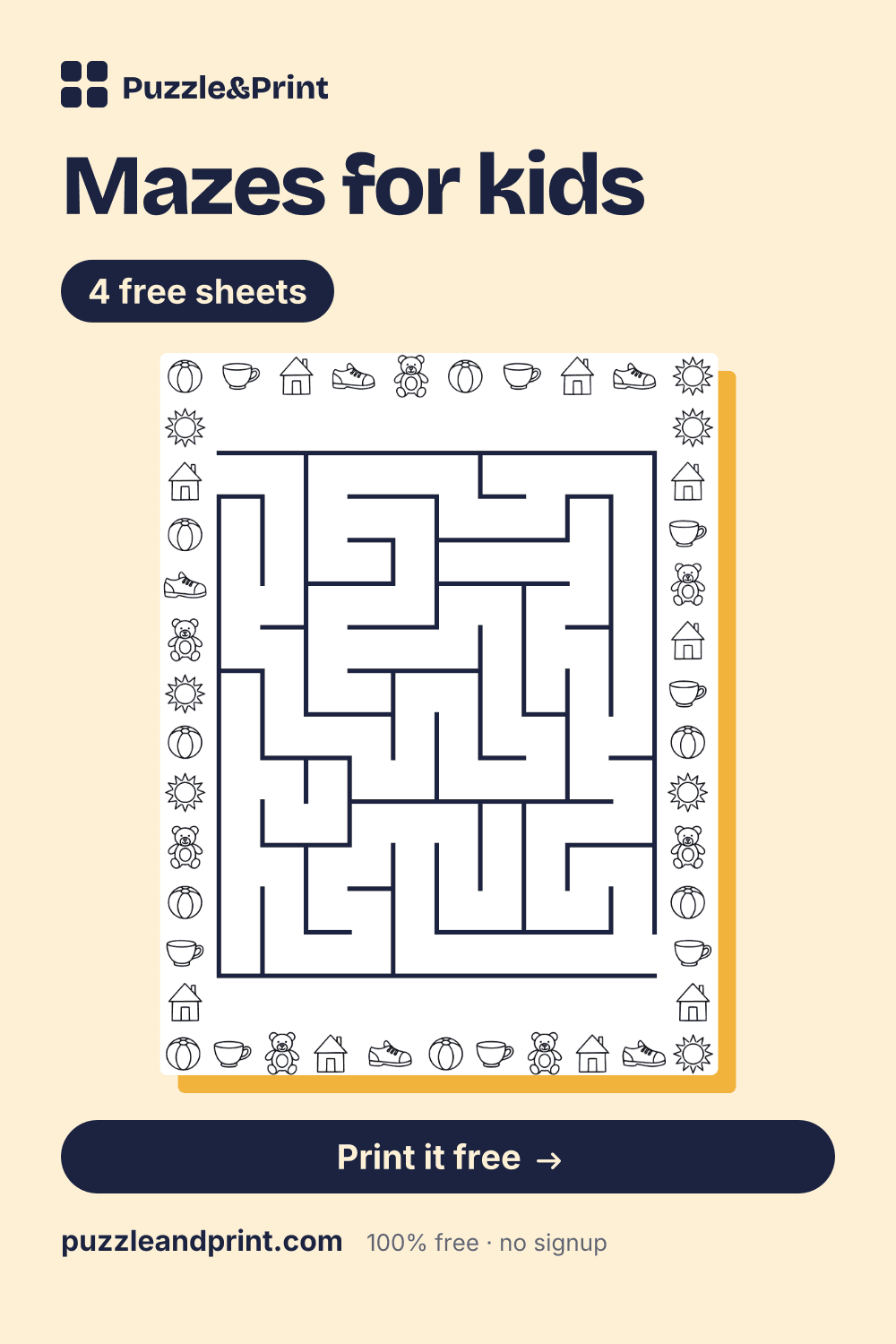
Maze
Created for free at puzzleandprint.com
From a first maze to a proper challenge, with solutions on separate pages.
Last updated
Save this to PinterestMaze
Created for free at puzzleandprint.com
Maze, Solution
Created for free at puzzleandprint.com
Four mazes, each a different size. Every one is a two-page PDF, the maze, then the solution on its own page.
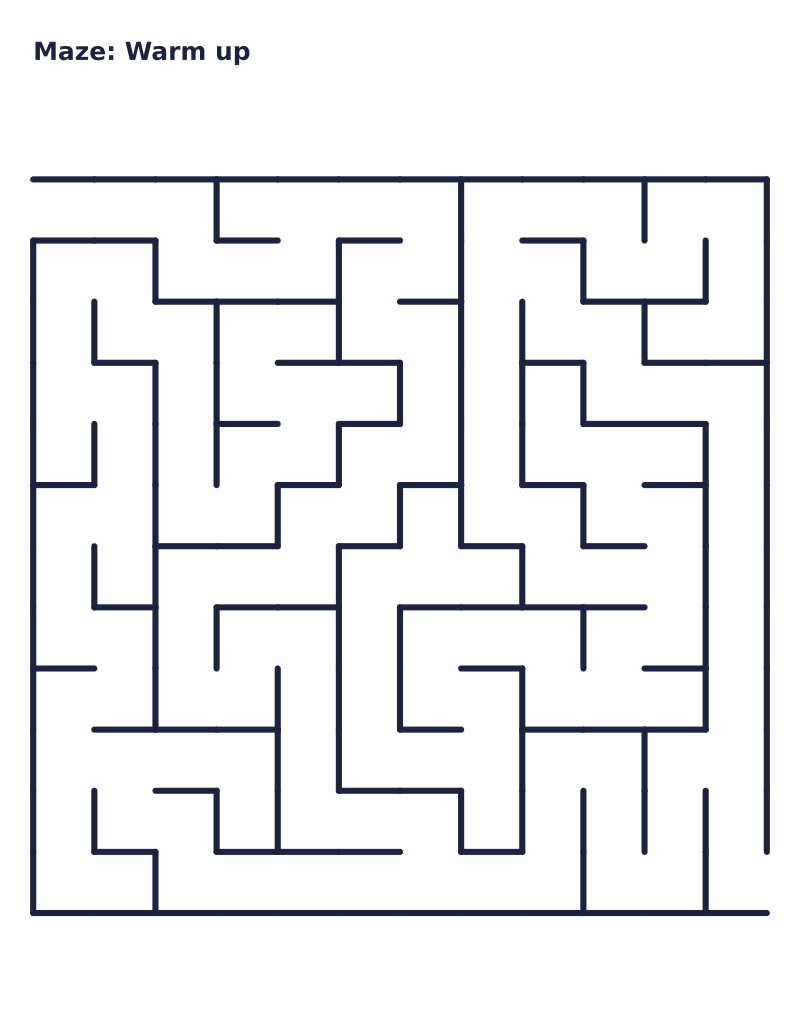 Maze, warm up12 × 12 squares · EasyDownload PDF ↓
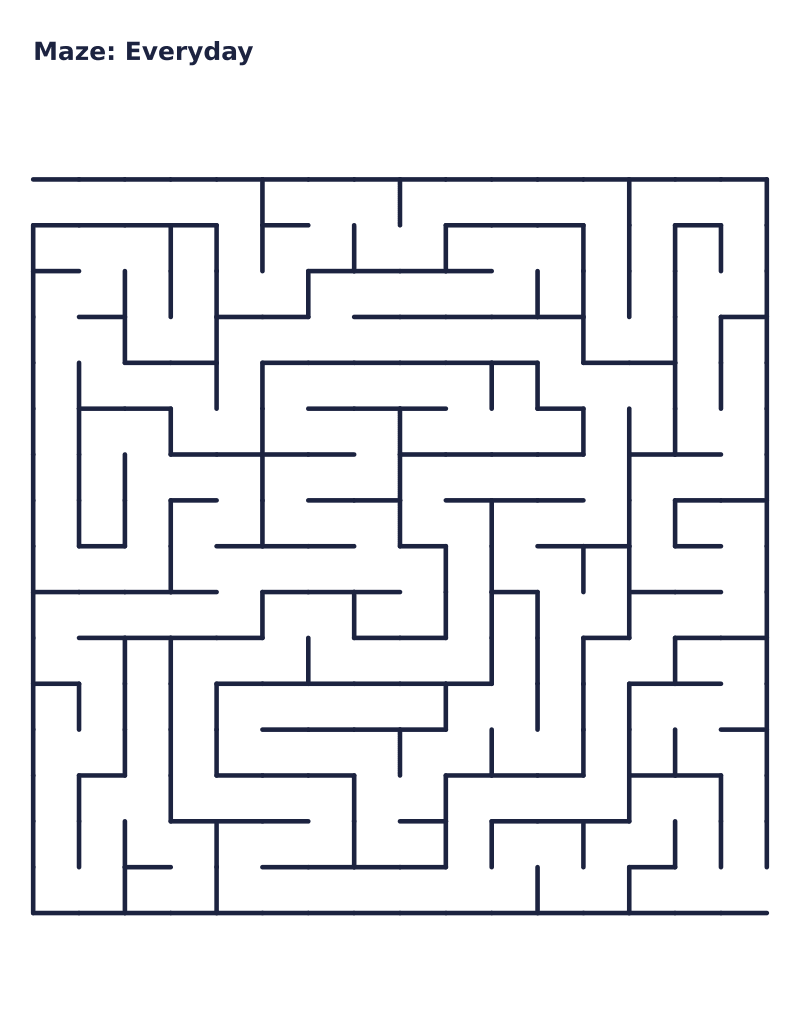 Maze, everyday16 × 16 squares · MediumDownload PDF ↓
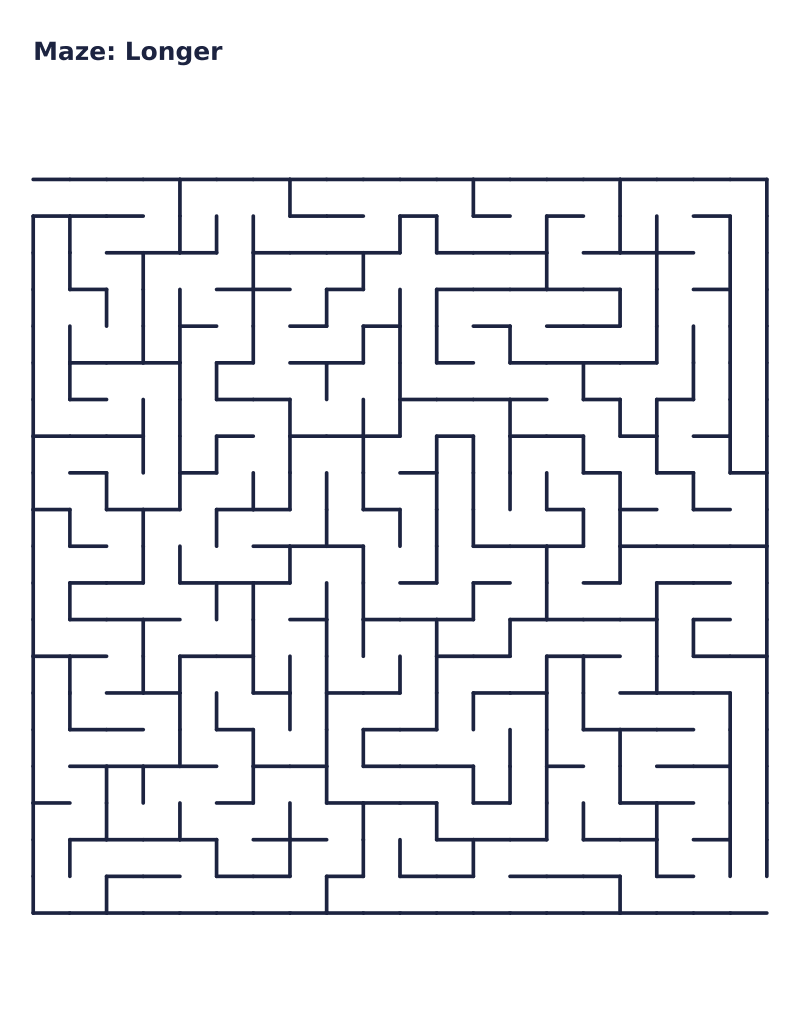 Maze, longer20 × 20 squares · MediumDownload PDF ↓
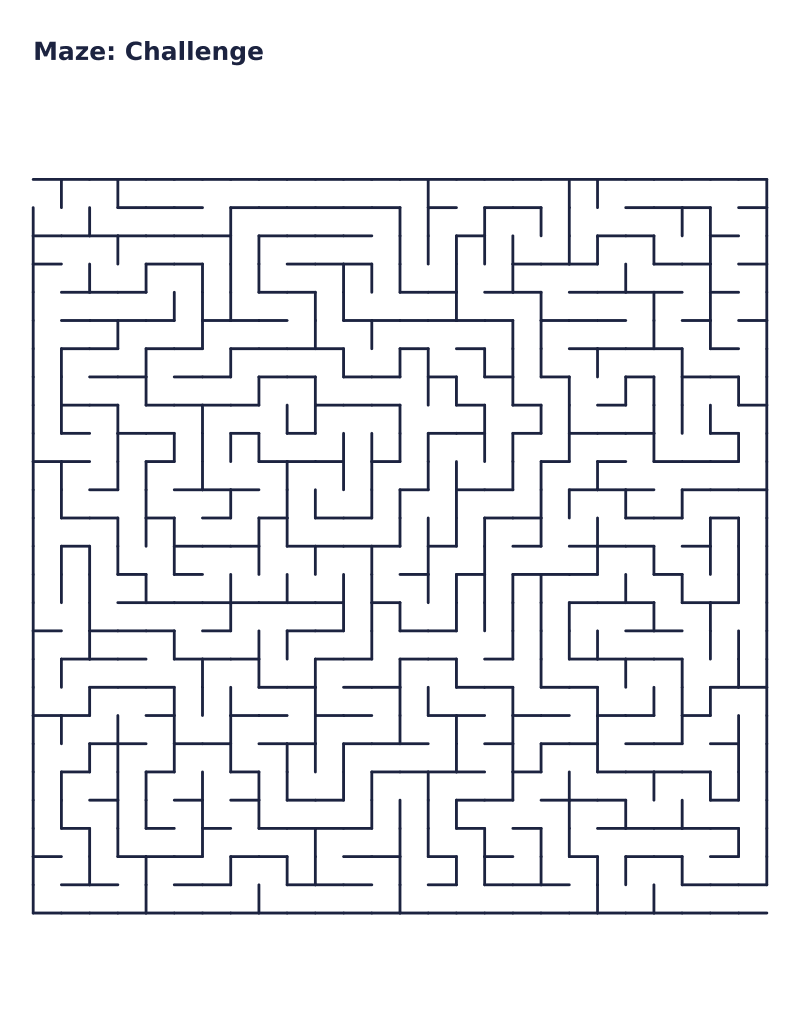 Maze, challenge26 × 26 squares · HardDownload PDF ↓
Every sheet here is free to print as often as you like. If one saved you time, the tip jar is on Ko-fi.
Mazes are one of the few puzzles that ask nothing of reading, which makes them useful for a child who is not reading confidently yet, for a mixed-age group, and for anyone who is tired of being tested. There is no vocabulary to know and no instructions to follow beyond getting from one side to the other.
The four sheets step up in a way that suits how children actually progress. The first is twelve squares and takes a minute or two. The last is twenty-six and is a genuine sit-down puzzle. Printing a mixture is the useful move with a group, the same activity, so nobody feels singled out, but the right level of challenge each.
A tip worth passing on: children who keep losing their place do better with a highlighter than with a smaller maze. Marking the route as you go turns it from a memory task into a drawing one, and the finished sheet looks like an achievement.
Each of the four PDFs is two pages: the maze, then the same maze with Solution added to its title, no name line and the route drawn in gray beneath the walls, so the answer copy is easy to keep back. With no loops in any of them, that gray line is the only way through and settles any argument about a shortcut.
Three things change between the Warm up and Challenge mazes for kids: the squares shrink from about 15 mm across to about 7 mm, the route grows from 45 squares to 327, and the number of forks on the correct route rises from three to 31. The two sheets in between sit on the same scale. Everyday has 11 mm squares, a 67-square route and six forks; Longer has 9 mm squares, a 141-square route and 11 forks. The biggest single jump is the last one, where the forks nearly triple, so a child who manages Longer comfortably may still find Challenge a different kind of task.
The corridor width is worth matching to what the child holds. The 15 mm squares of Warm up leave room for a chunky crayon, and the 11 mm squares of Everyday still suit a thick pencil, but the 7 mm squares of Challenge want a sharpened pencil and a steadier hand. Warm up also tests pencil control more than planning: with only three forks, most of the sheet is simply following a corridor. Two of those three forks do lead into long dead ends, of 33 and 37 squares, so a child who goes wrong there travels some way before realizing, which is a fair first lesson in going back to the last fork.
The Longer kids maze is kinder because every wrong turn on it but one ends within four squares, while the smaller Everyday sheet hides a single wrong turn that leads into 172 of its 256 squares. That turn comes late, 55 squares into a 67-square route, in the bottom row of the maze, and the longest path into it runs 87 squares before it dead-ends. Every other fork on Everyday leads into a stub of one or two squares. So the Everyday sheet is mostly easy with one serious trap, and the Longer sheet is a longer walk with many small choices and nothing much to get lost in.
The Everyday sheet is easy to rescue for the same reason. A child who has been drawing for a long time without reaching the way out has almost certainly taken that turn, because nothing else on the sheet is long enough to get lost in; send them back to the bottom row and the fork where they left the route. The Challenge sheet works the same way on a larger scale. Its two long wrong turns, of 72 and 125 squares, both open in the final eighth of the route, so a child who has made it most of the way across still has the hardest decisions ahead.
No, nothing on these mazes needs reading: the only words on a sheet are its title, a name and date line and a one-line credit at the foot. The way in is a gap in the left wall of the top-left square and the way out a gap in the right wall of the bottom-right square. The ready-made PDFs print no arrows, so show a non-reader both gaps first, or use the maker on this page, which adds arrows unless you choose No arrows.
The Warm up sheet, twelve squares each way and marked Easy. Its correct route passes through 45 of its 144 squares, the shortest route in the set. Challenge, at twenty-six squares, is the other end, with a route of 327 squares, and is better kept for an older child or one who has already asked for something harder.
Yes. In the maze maker on this page, raise How many versions to as many as five and the download holds that many different mazes at the same size, each followed by its own solution page. For a larger group, press New maze and download again, so children sitting together need not have the same puzzle.
New printables when they go up, mostly seasonal, a few times a year.