Coordinate Plane
Created for free at puzzleandprint.com
Numbered x and y axes, in all four quadrants or just the first.
Save this to PinterestCreated for free at puzzleandprint.com
Ruled sheets at the standard sizes, each one a single page. The measurement is printed at the foot, so a reprint can be checked against a ruler.
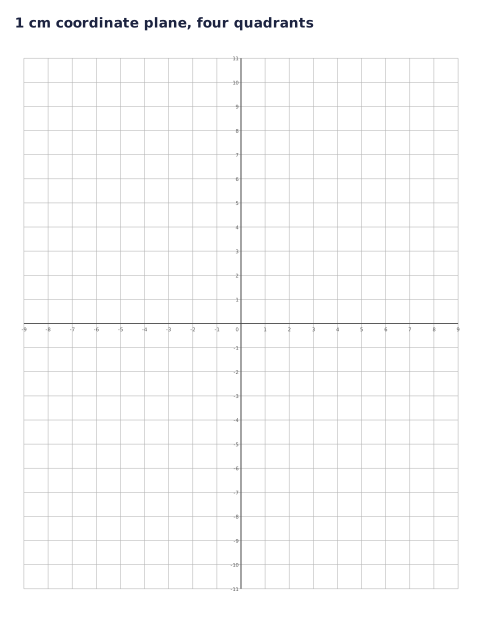 1 cm, four quadrants10 mm squares, numbered both ways from zeroDownload PDF ↓
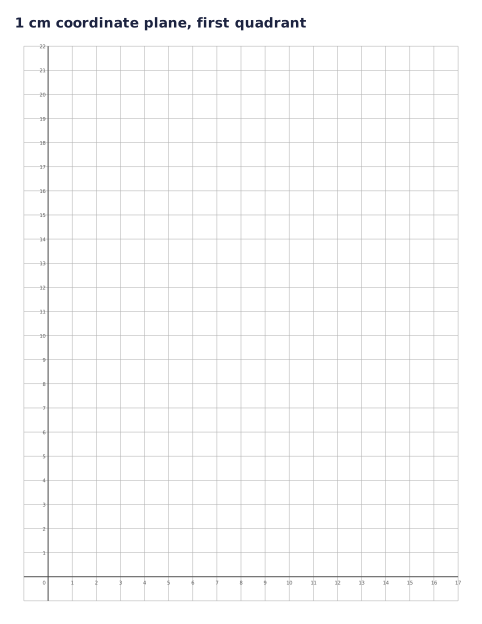 1 cm, first quadrant10 mm squares, positive numbers onlyDownload PDF ↓
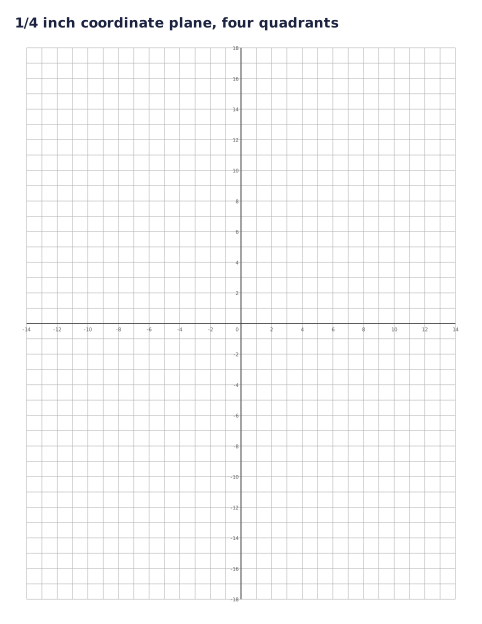 1/4 inch, four quadrants6.35 mm squares, numbered both ways from zeroDownload PDF ↓
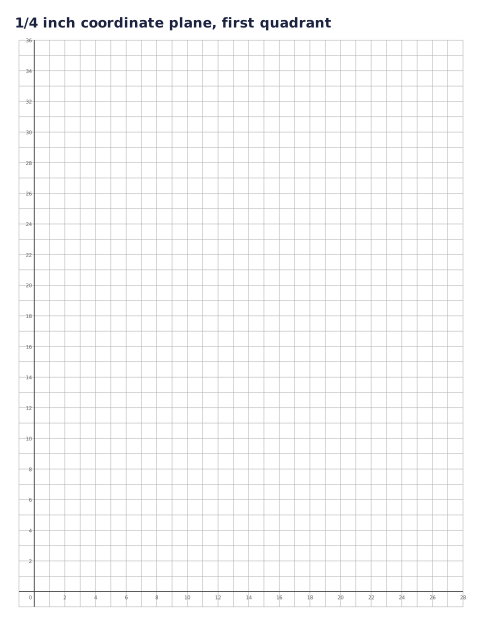 1/4 inch, first quadrant6.35 mm squares, positive numbers onlyDownload PDF ↓
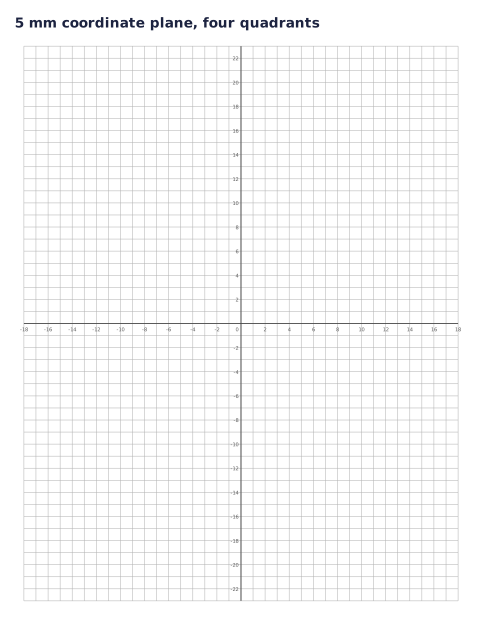 5 mm, four quadrants5 mm squares, numbered both ways from zeroDownload PDF ↓
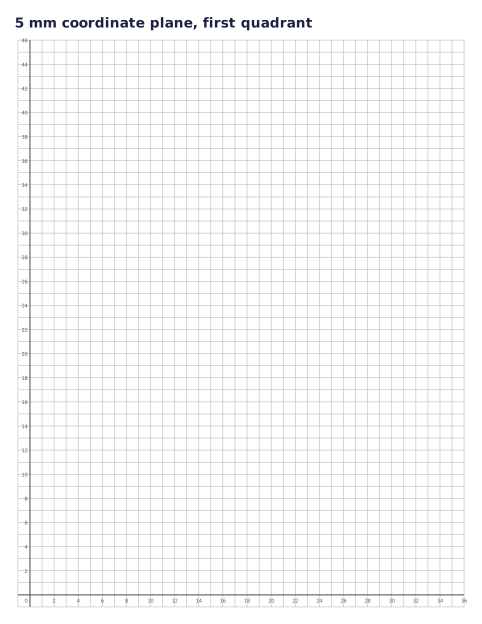 5 mm, first quadrant5 mm squares, positive numbers onlyDownload PDF ↓
A coordinate plane is squared paper with the two axes drawn on it and numbered, and it is the sheet every plotting exercise assumes you already have. Ordered pairs, straight-line graphs, translations and reflections all need one, and a lesson stalls while somebody rules axes onto blank squares and numbers them by hand.
The four-quadrant sheets number outwards from zero in both directions, which is what you want once negative coordinates have been introduced. The first-quadrant sheets are the same grid with the origin moved into the bottom-left corner and only positive numbers on it, worth having as a separate sheet rather than as a setting, because a plane full of negative numbers is a distraction for a class that has not met them yet.
One centimetre is the size to print if you are unsure: it gives roughly nine units either side of the origin on US Letter, which covers most textbook questions and leaves the numbers big enough to read. Quarter inch and five millimetre sheets trade range for room, and go further out for anything that needs it.
The grid itself prints light and the axes print dark, so a plotted point sits on top of the paper rather than competing with it. Print as many as you like. There is no sign-up, no watermark, and nothing on the sheet that is not the plane.
Four once negative coordinates have been introduced, one before that. They are separate sheets rather than a setting, because a plane covered in negative numbers is a distraction for a class that has not met them yet.
The 1 cm sheet gives roughly nine units either side of the origin on US Letter, which covers most textbook questions and keeps the numbers large enough to read. The quarter-inch and 5 mm sheets trade that legibility for range.
Yes. Print as many sheets as you like, for yourself, a class or a workplace. There is no sign-up, no watermark and no limit.
Almost always because the printer scaled it. Choose 100% or "actual size" rather than "fit to page" in the print dialog. If it still does not match, measure ten squares of the book and divide by ten, the book may not be the size you think it is.
Exactly 6.35 mm. Paper sold as 6 mm is a different thing, and over the width of a page the two are about 5 mm apart, which is enough to notice.
The gap between lines. Wide ruled is 8.7 mm and is what primary schools generally use, college ruled is 7.1 mm, and narrow ruled is 6.35 mm. All three are here.
The sheets are US Letter. A4 is slightly narrower and taller, so printing at 100% will simply crop a little from the right and leave a gap at the foot, the spacing itself stays correct, which is the part that matters.
Drawing three-dimensional objects without constructing perspective. It suits technical sketching, product design and any maths topic involving volume or nets, because every edge of a cube follows a line already on the page.
New printables when they go up, mostly seasonal, a few times a year.