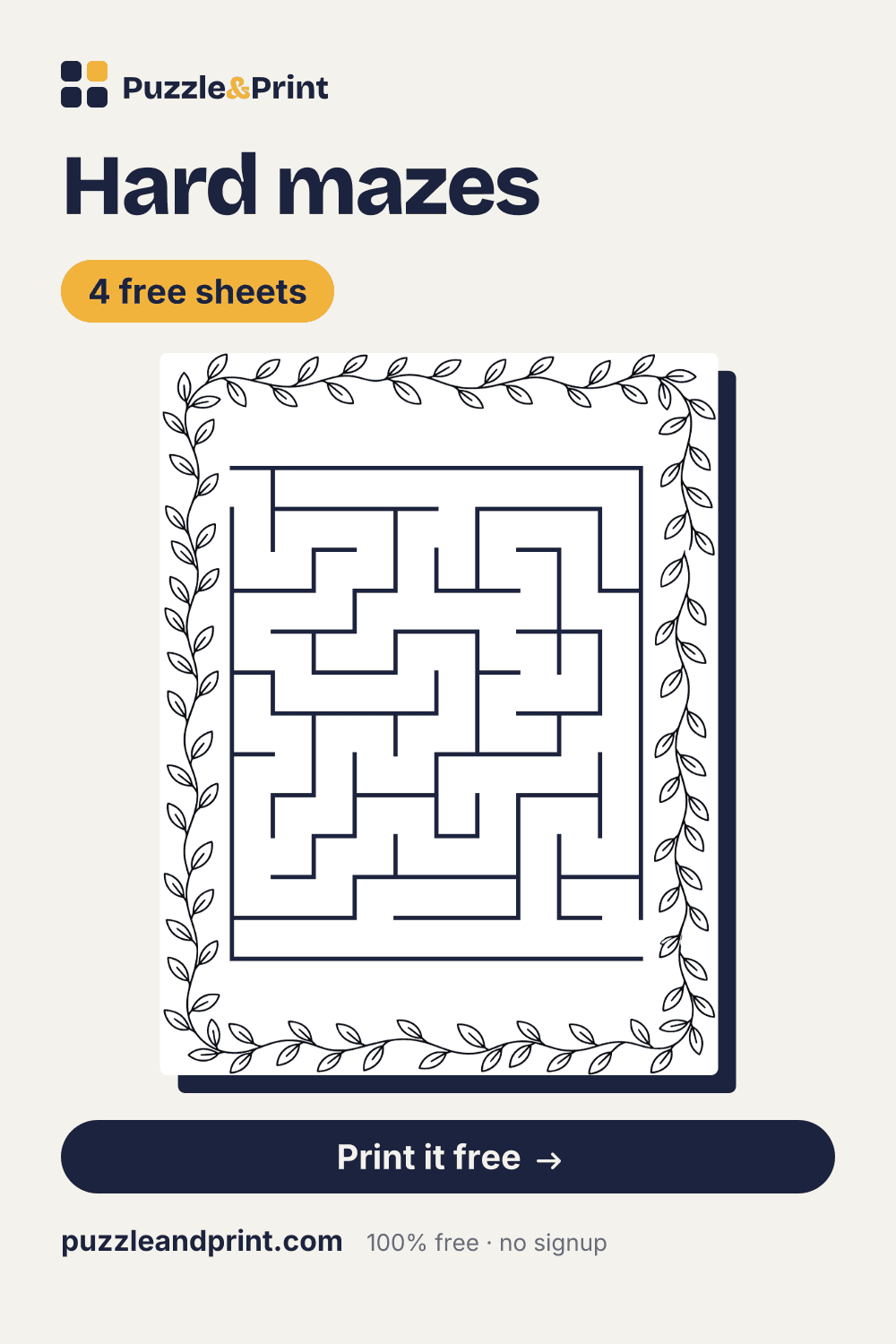
Hard Maze
Created for free at puzzleandprint.com
Created for free at puzzleandprint.com
Created for free at puzzleandprint.com
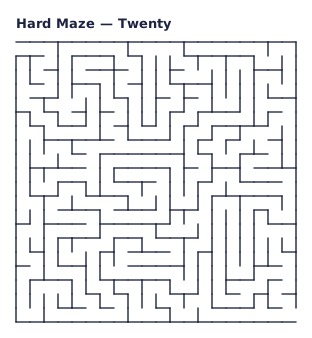
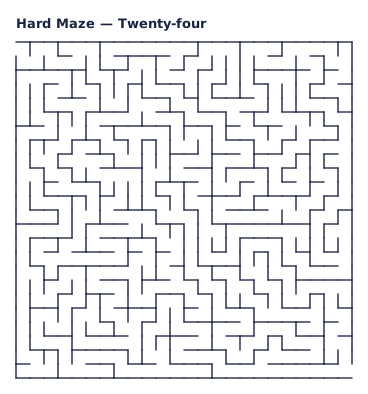
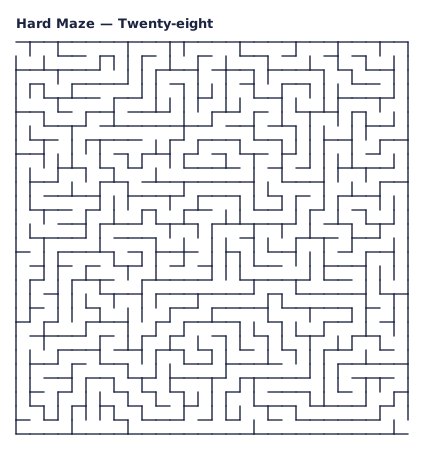
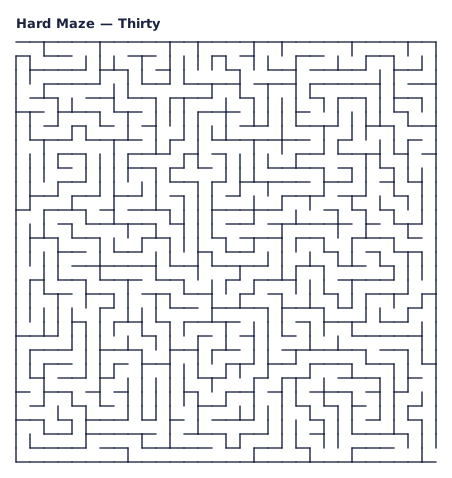
Four mazes, each a different size. Every one is a two-page PDF, the maze, then the solution on its own page.
Past about twenty squares a maze stops being something you solve by looking and becomes something you solve by working. The route doubles back on itself, the dead ends get long enough to be convincing, and you generally need a pencil rather than a finger.
The four sheets here run from twenty to thirty squares. Thirty is the largest size that still prints with corridors wide enough to draw a line in on Letter paper, which is why the generator stops there rather than going higher. A bigger maze on the same sheet is not a harder puzzle, just a fiddlier one.
Difficulty in a maze is mostly about length of route and frequency of branching, and both scale with size. Every maze here is still a perfect maze (fully connected, exactly one path between any two points), so there are no tricks, no loops that waste your time, and no unreachable corners.
These suit adults, older children, and anyone who wants something absorbing that is not on a screen. The solution prints separately, so you can put it face down and stay honest.
Because thirty is the largest grid that still prints with corridors wide enough to draw a line inside on US Letter. Past that the maze is not harder, only fiddlier, and it becomes a test of pen control rather than of route-finding.
Rarely past about twenty squares. Below that a finger and a decent memory will do it. Above it the route doubles back often enough that you need to mark where you have been, and that switch is roughly where a maze stops being a glance and becomes a sit-down.
Yes, and there is exactly one. Every maze is generated so that all squares connect and no route loops back on itself, which means a wrong turn always ends in a dead end rather than sending you round in a circle.
On page two of the PDF, printed as a line through the maze. It is on a separate sheet so you can hand out the puzzle and keep the solution.
Easy, at twelve squares. The corridors are wide enough for a crayon and the route is short enough to finish in a couple of minutes. If that is still hard, use the stepper to go down to ten or nine squares.
Press New maze. It generates a completely different layout at the same size, so you can print a set where no two children have the same puzzle.
Not yet, rectangular only for now. Round mazes are a different drawing problem and we would rather ship one shape that prints properly than two that half work.
No. There is no sign-up and no watermark. Mazes are generated in your browser, so nothing you make is sent to us.
New printables when they go up, mostly seasonal, a few times a year.