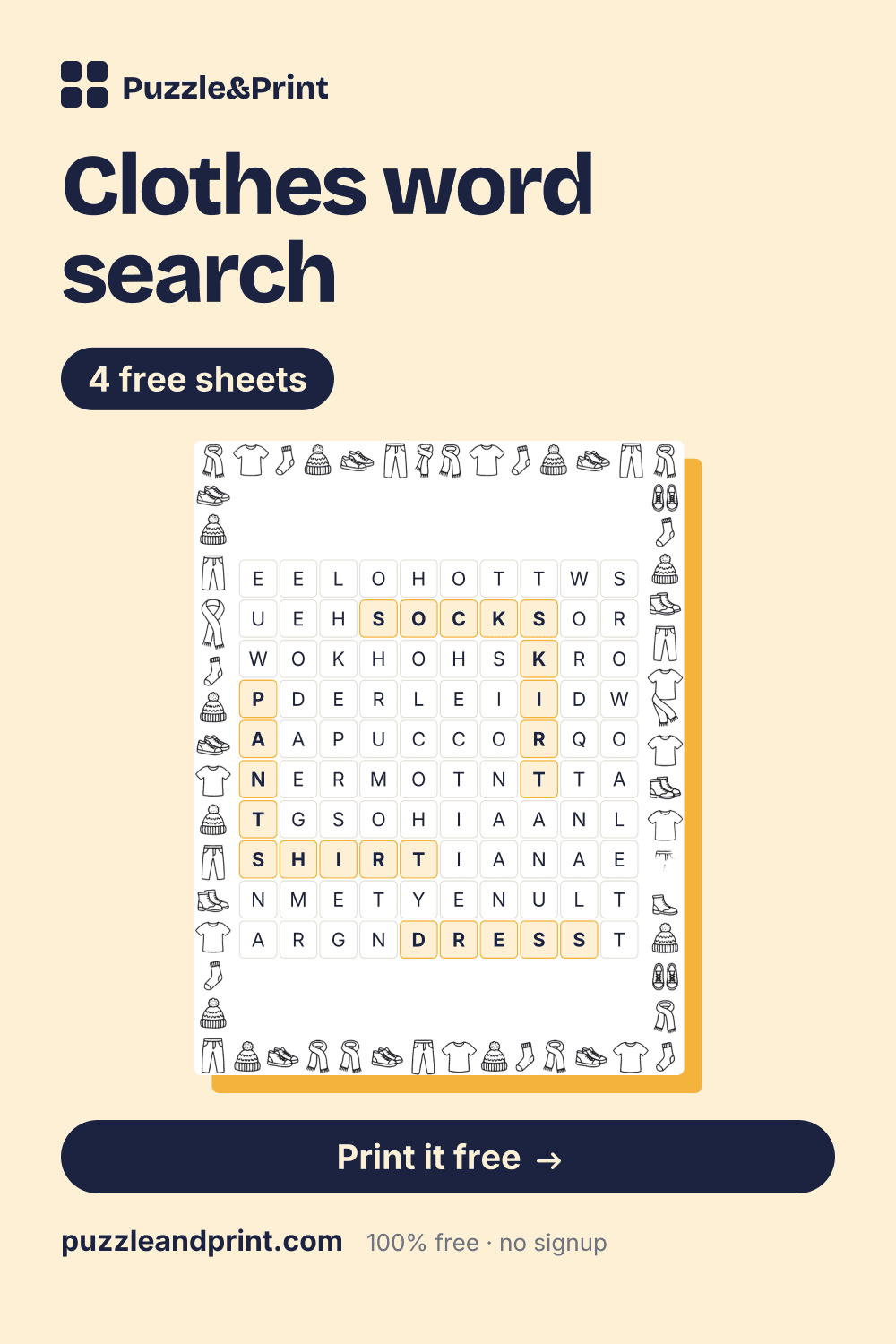
Clothes Word Search
- DRESS
- BLOUSE
- SOCKS
- VEST
- PONCHO
- SKIRT
- SHOES
- SWIMSUIT
- MITTENS
- BONNET
- BOOTS
- SCARF
Created for free at puzzleandprint.com
Created for free at puzzleandprint.com
Created for free at puzzleandprint.com
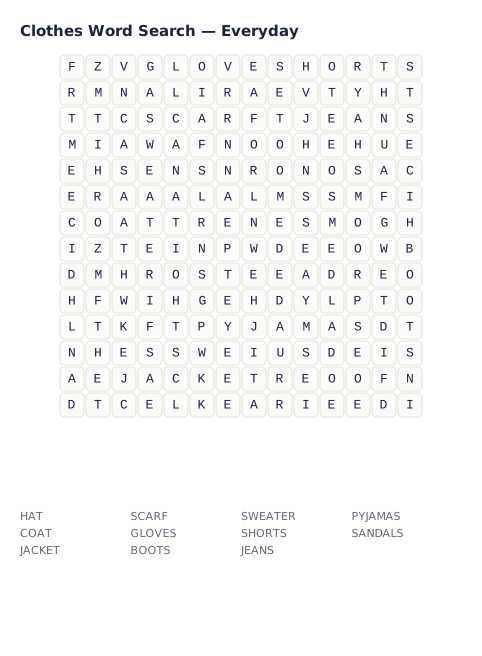
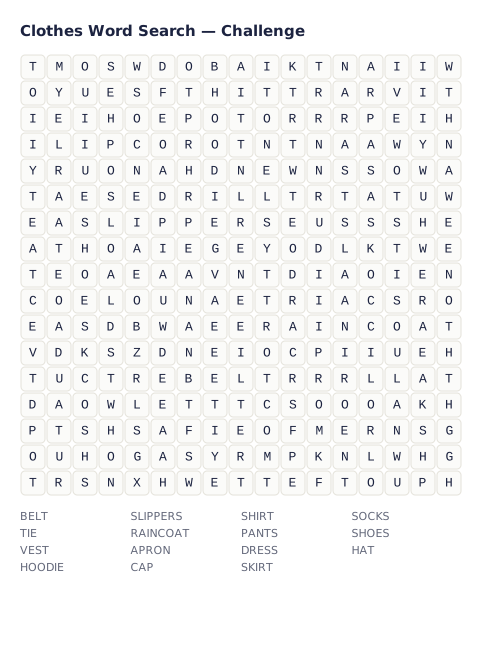
Four sheets, each with a different job. Every one is a two-page PDF, the puzzle, then the answer key on its own page.
Clothing vocabulary is concrete, daily and easy to check, which makes it dependable early-reading material. The list covers all weather, so it can be used at any point in the year.
It supports a simple sorting activity once finished: which of these would you wear in the snow? That turns a word hunt into a short piece of reasoning.
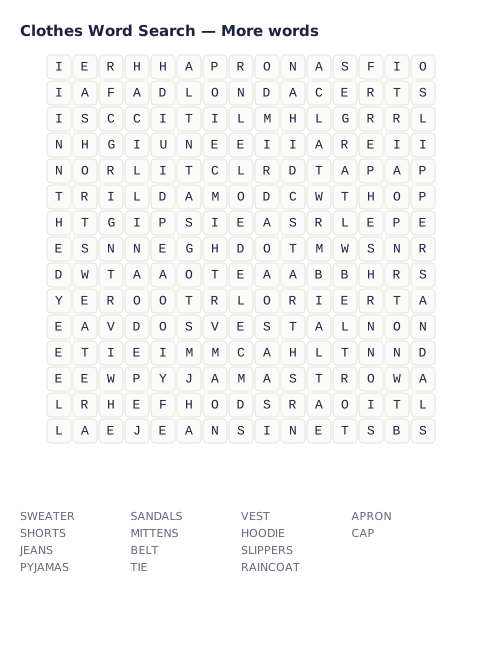
Clothing words are practical vocabulary children use daily, and the list includes several that are commonly misspelled, pyjamas, sandals and raincoat among them.
It pairs neatly with getting dressed independently, or with packing for a trip. Find the word, then go and find the item, is a reasonable game for a younger child.
Both are on the list on purpose. TROUSERS sits beside PANTS, SNEAKERS beside BOOTS, and PYJAMAS is spelled the British way. A child meeting both is learning something true about the language rather than being confused by it.
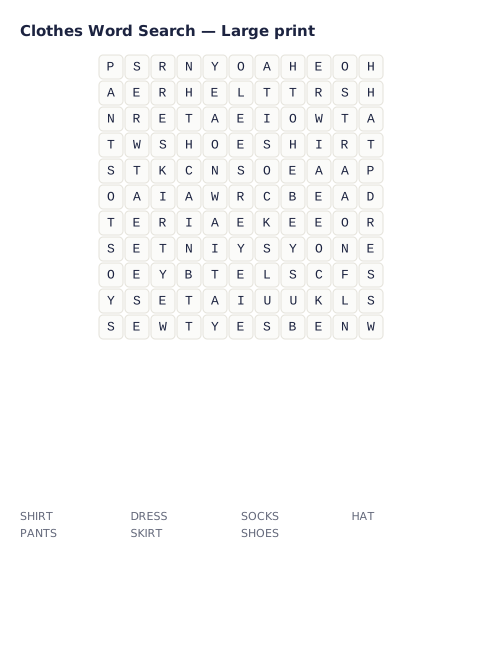
It is one of the more practical themes for the very young. Everything on the large-print sheet, SHIRT, PANTS, DRESS, SKIRT, SOCKS, SHOES and HAT, is something a child handles daily, so the words are already attached to objects.
Up to twenty-five. Ten to fifteen is comfortable for most grids. If you add more than the grid can hold, the tool tells you which words did not fit rather than silently leaving them out.
Either it is longer than the grid is wide, or the grid filled up before it could be placed. Try the next size up, remove a word, or press New puzzle for a different arrangement, a word that fails one layout often places fine in the next.
Yes. Set difficulty to Easy so words only run left to right and top to bottom, and use a 10 by 10 grid with five to eight short words. That combination is manageable for most children who can read the words on the list.
Always, and it prints on its own page so you can hand out the puzzle without it. Each answer is marked directly on a copy of the grid.
No. There is no sign-up, no email, and no watermark on the printed sheet. Puzzles are built in your browser, so your word list never reaches us.
Yes, use them with your class, your family, your club, or your care home, and print as many copies as you need. The one thing we ask is that you do not resell the sheets themselves.
New printables when they go up, mostly seasonal, a few times a year.